


Observation and question
An observation describes something noticed or measured. A scientific question asks about a relationship that can be investigated.
Use a plant investigation to explain hypotheses, variables, fair tests, and evidence.
Drag and drop your files here.
Paste a link from YouTube, TikTok, X/Twitter, Instagram, Facebook, or any website.
The sample uses a plant-growth investigation to connect scientific vocabulary to a concrete example. Its numbers are illustrative teaching data.
An observation describes something noticed or measured. A scientific question asks about a relationship that can be investigated.
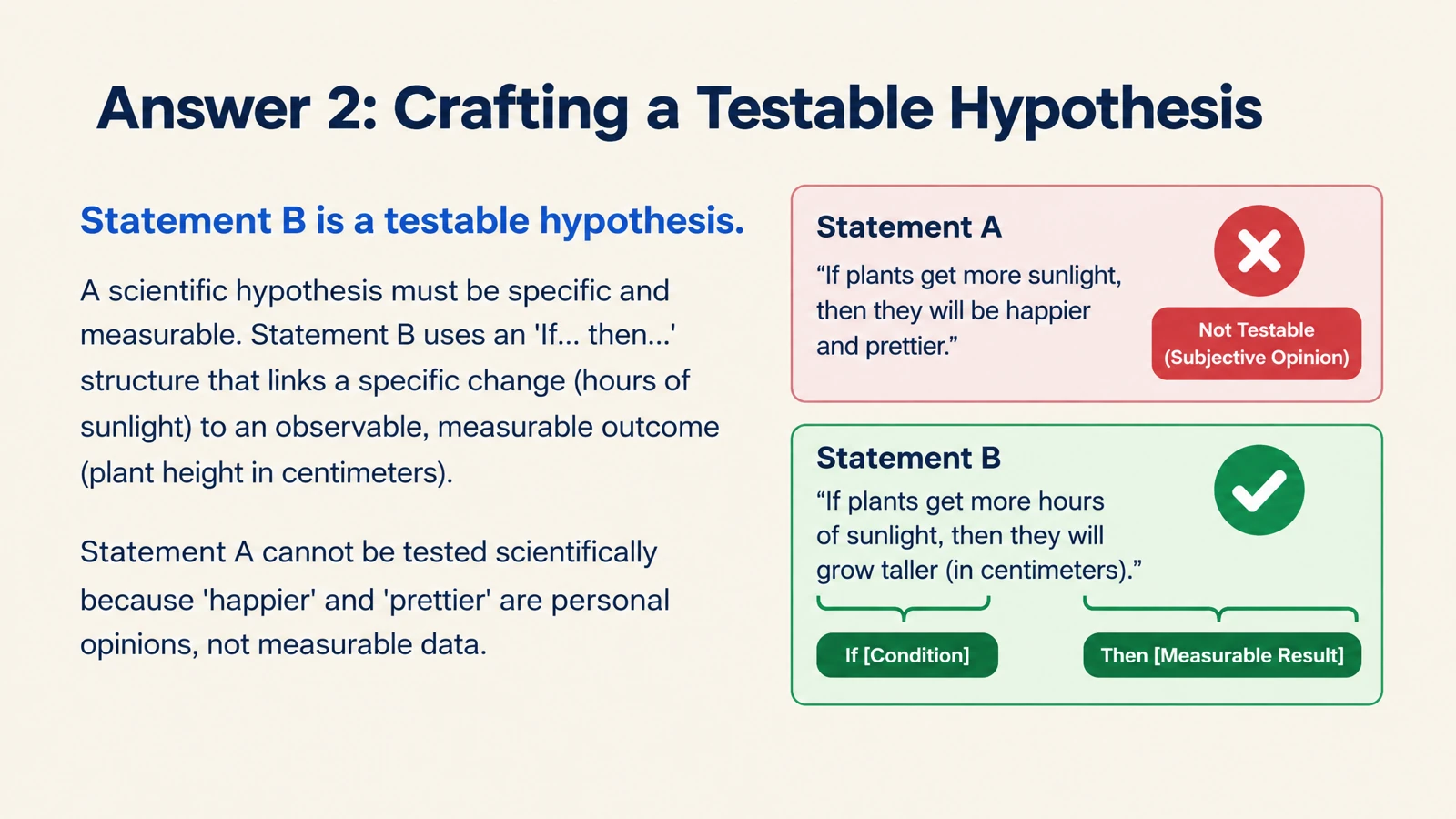
A hypothesis proposes an explanation or expected relationship that evidence can test. Make the variables and measurable outcome clear.
The factor deliberately changed in the investigation. In the sample, it is the number of hours of light given to the plants.
The outcome measured in the investigation. In the sample, it is plant height measured after the specified period.
Keep other relevant conditions consistent while changing the factor under investigation. If water and light both change, the explanation of the result becomes harder to separate.
Describe the pattern in the measurements and connect it to the question. Distinguish the observed data from the conclusion you draw from it.
Use a short, focused practice session to connect the answers to what you are learning.
A plant comparison gives the terms a practical setting. Identify the question, choose what changes, and decide what evidence to collect before explaining what the results show.
Name what changes and what is measured: Before revealing the variable answer, explain both parts in a sentence. This connects the terminology to the design.
Spot a comparison problem: Ask what would happen if two conditions changed together. Use the fair-test card to discuss how the investigation could isolate one factor.
Create a set for the class experiment: Paste the procedure or notes and ask for questions about the investigation’s design, measurements, and interpretation.
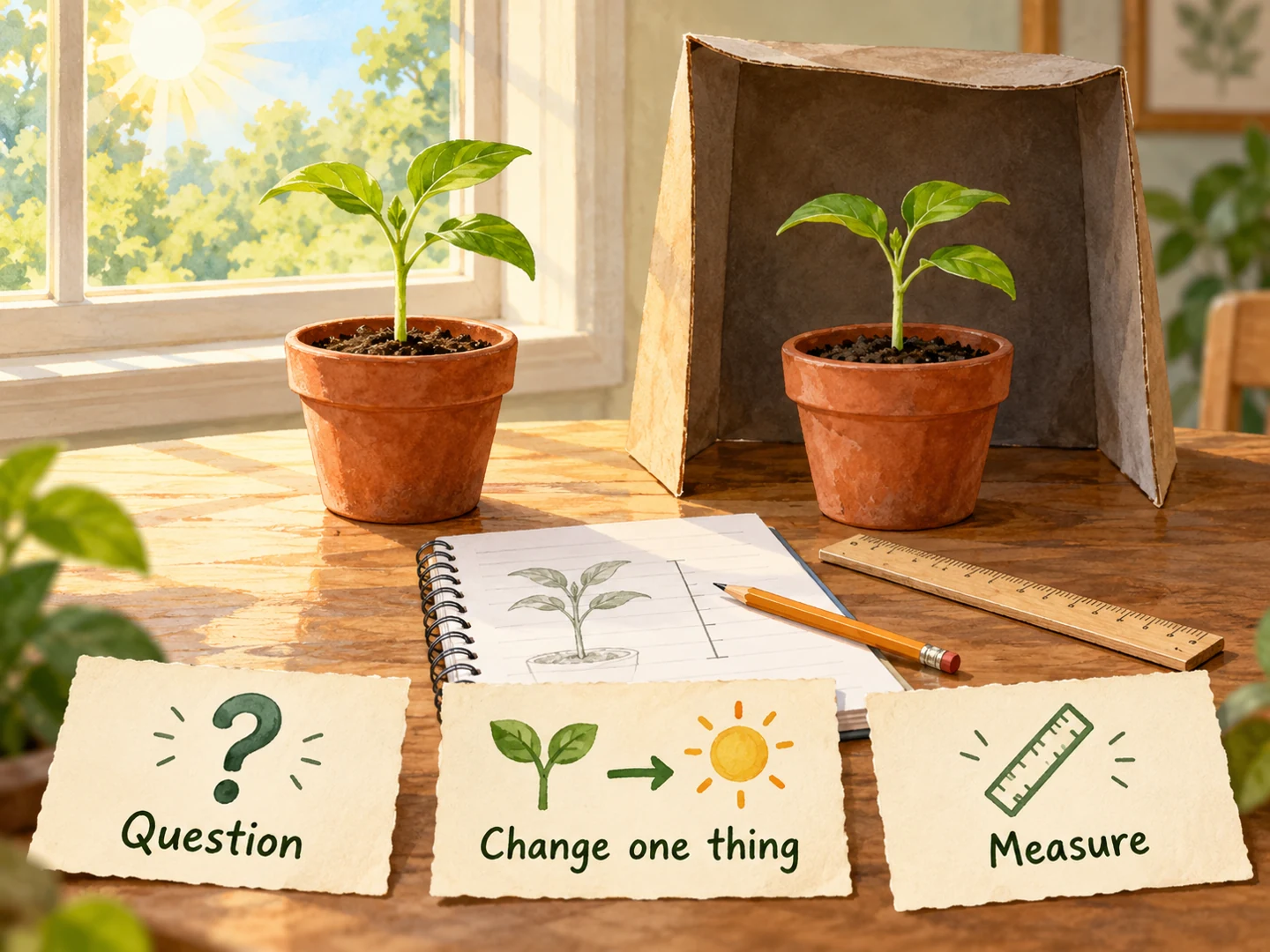
Download five illustrated question-and-answer pairs in a ten-page PDF. Keep the relevant pages beside the class experiment or use the complete set for a recap.
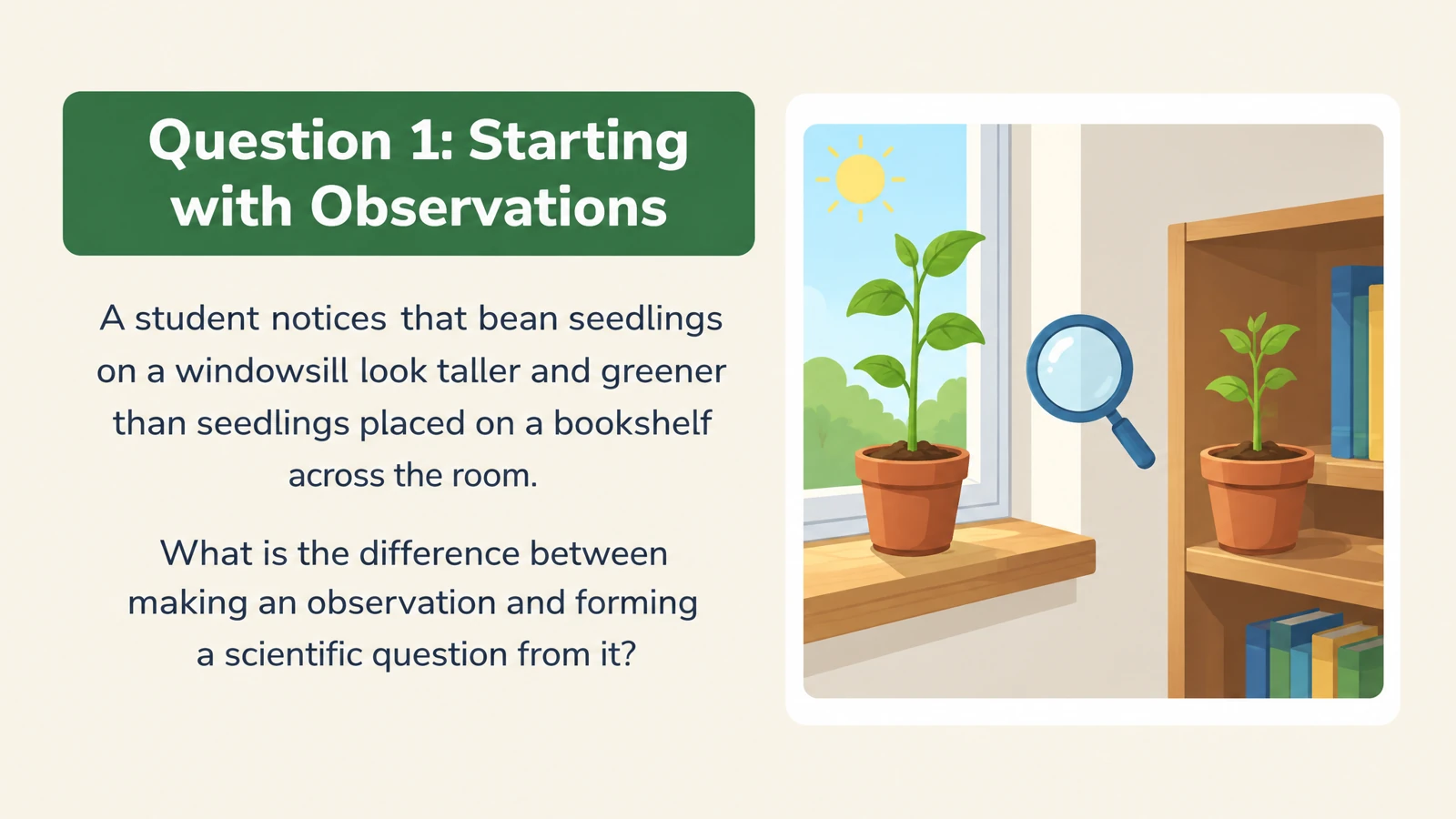
Use the opening prompt to name what you want to find out. The complete download follows the investigation vocabulary through five pairs.
Download the Science Investigation PDF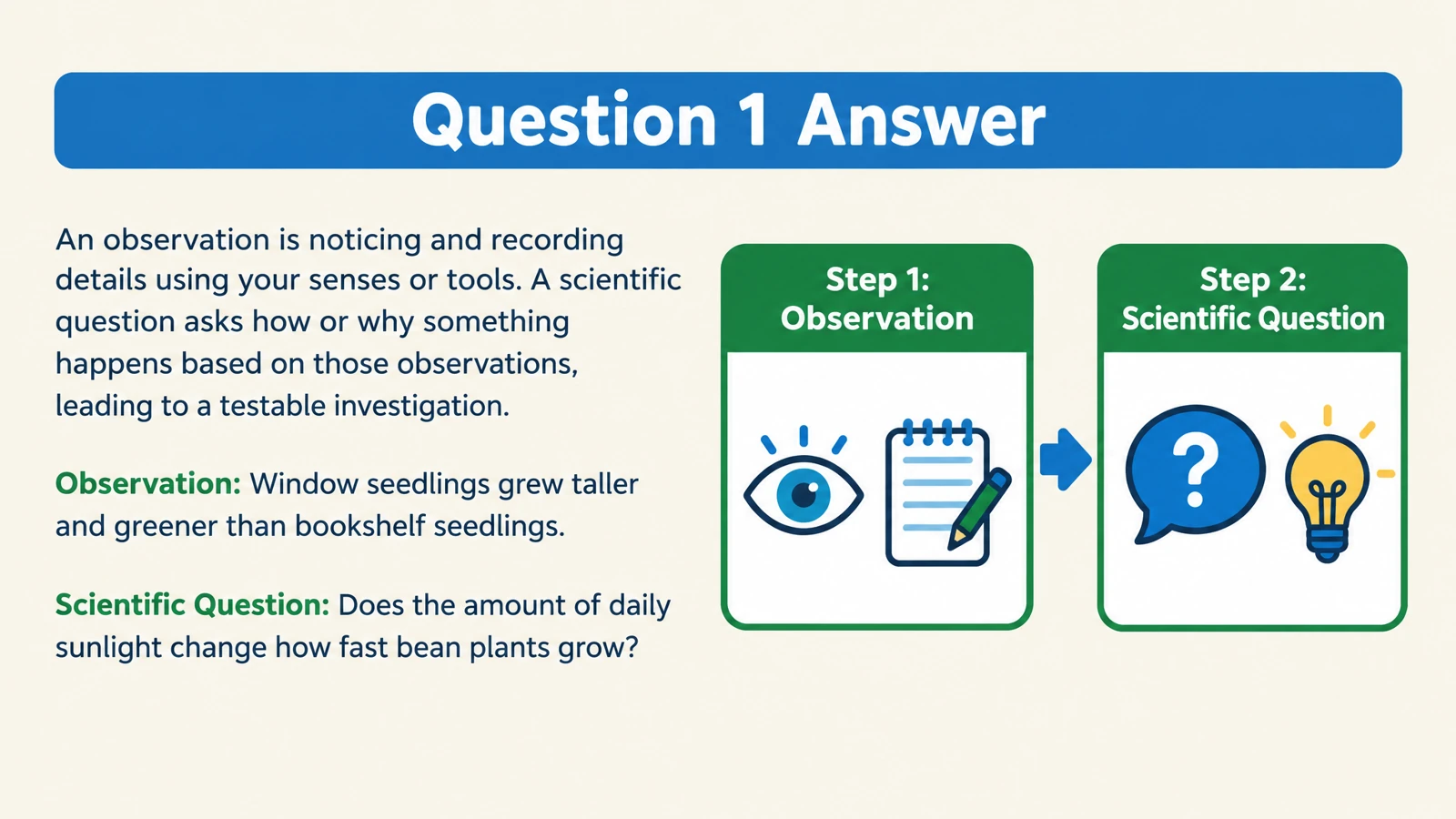
Relate the illustrated answer to the experiment you are planning. Name what you change, measure, or keep similar in that example.
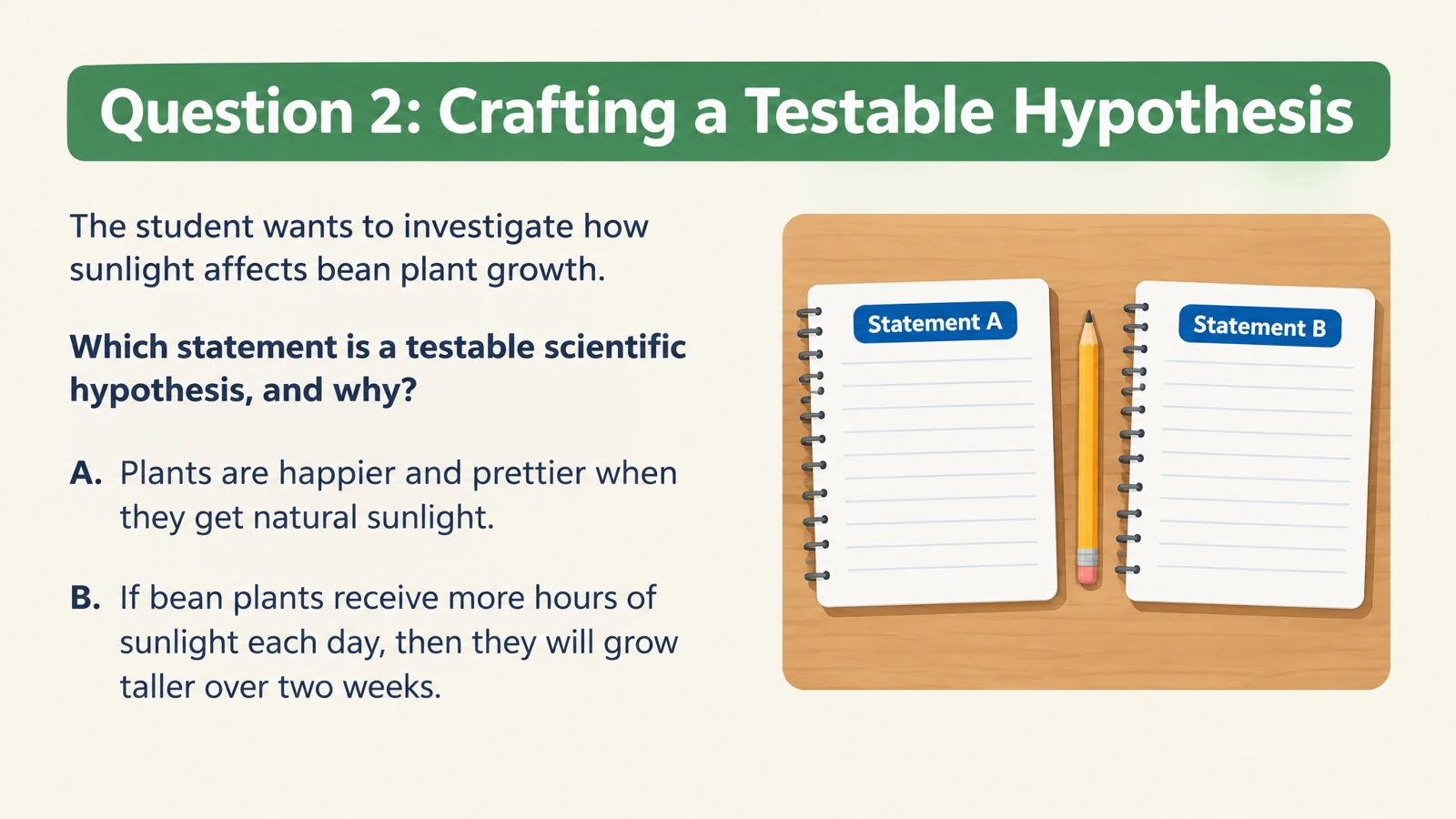
Continue through the next question and connect it with your own comparison. The PDF provides a sequence you can revisit after collecting evidence.
The five pairs follow an investigation through observations and questions, a testable hypothesis, variables, a fair test, and interpretation of results.
The sample labels its measurements as illustrative teaching data. They provide a concrete pattern for practicing interpretation.
Ask learners to identify the question, changed factor, measured outcome, and conditions to keep consistent. Use their explanations to discuss the plan.
Yes. Paste the procedure or upload the lesson material, then request questions about the variables, method, measurements, and conclusions.
Yes. Describe the topic and audience, or add your course material. Ask for the concepts and examples you want learners to explain.
Yes. The PDF includes all five question-and-answer pairs. Print the pages you want for an investigation discussion or review.
Yes. Generate your own set and export editable PPTX. Add details from your class experiment or adjust the questions for another audience.
Connect cell structures with their functions in an illustrated set.
Revisit atoms, ions, and bonding through visual explanations.
Explain forces and motion with familiar illustrated situations.
Explore fraction models, comparisons, and printable math practice.
Study body systems through the functions they perform.
Explore eleven complete illustrated sets and download their PDFs.
Make illustrated cards you can take to the study table or classroom.
Use a focused statement to start a clear explanation of the answer.
Create cards that connect the vocabulary to the investigation.