


What does 3/8 represent?
Three of eight equal parts. The denominator tells you how many equal parts make the whole, and the numerator tells you how many of those parts you are counting.
Use illustrated fraction models to explain equal parts, equivalent fractions, comparison, and addition.
Drag and drop your files here.
Paste a link from YouTube, TikTok, X/Twitter, Instagram, Facebook, or any website.
The example set uses pizzas, fraction bars, and a number line. Use these explanations to connect the pictures to the mathematics.
Three of eight equal parts. The denominator tells you how many equal parts make the whole, and the numerator tells you how many of those parts you are counting.
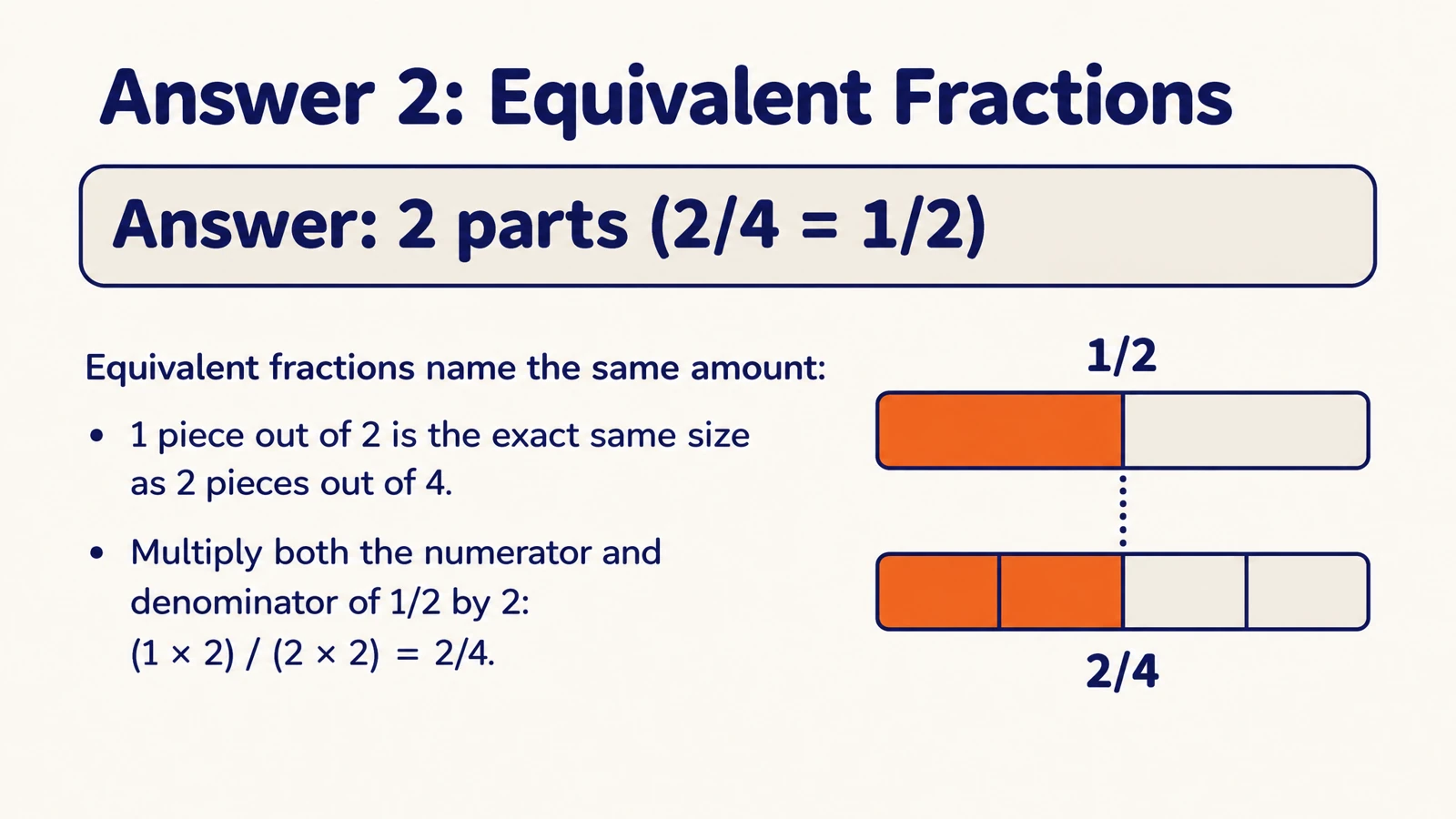
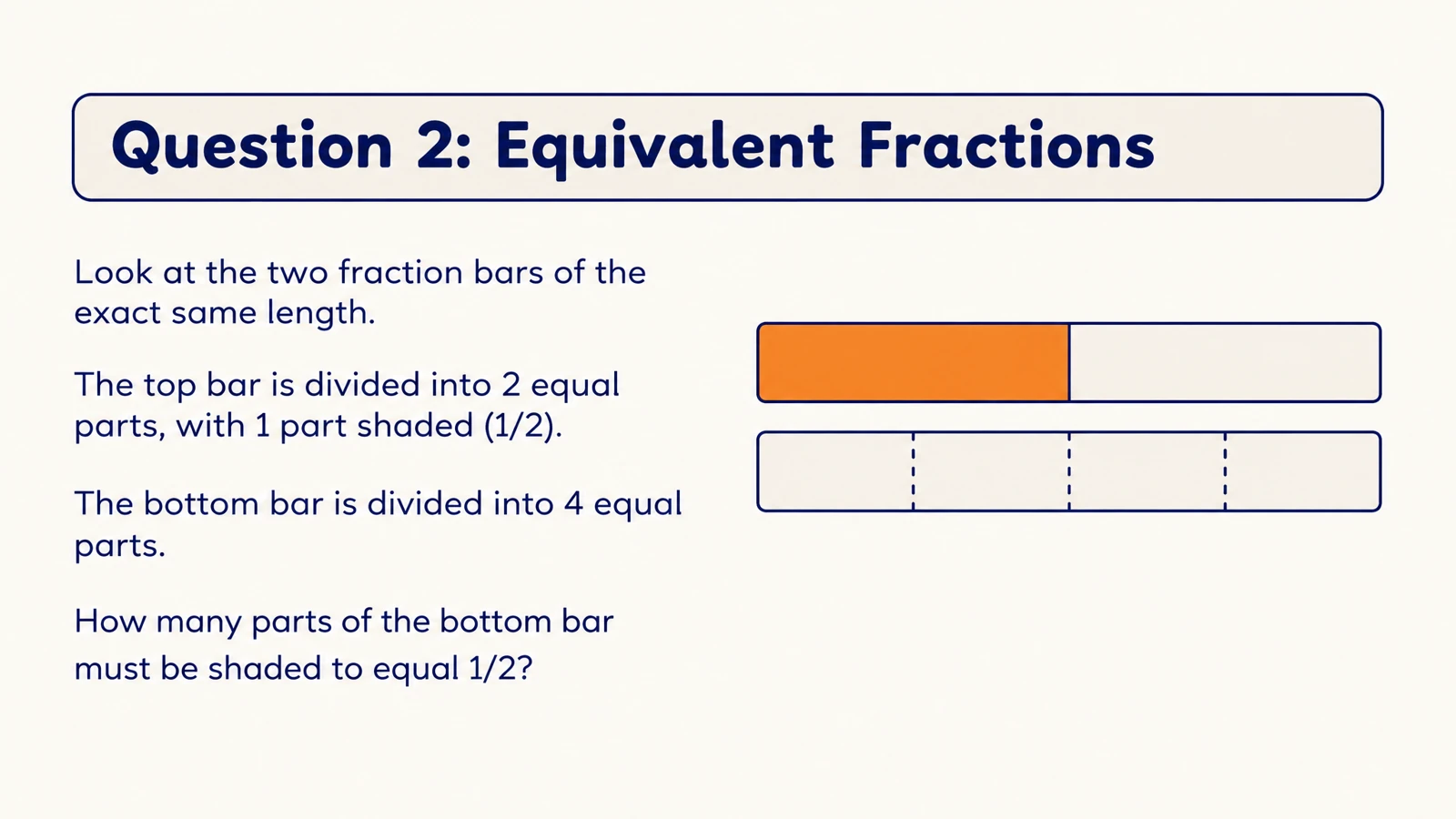
Both describe the same proportion of the same whole. Splitting each half into two equal pieces creates four pieces in total, with two pieces covering one half.
5/6 is greater. The sixths are the same size, so five of them cover more of the whole than three of them.
3/5. Add the number of fifths while keeping the unit the same: two fifths plus one fifth makes three fifths.
Divide the interval from zero to one into four equal spaces. The third step from zero marks three quarters.
Name the whole, describe its equal parts, and count the parts in the question. Connecting those steps to a model makes the reasoning visible.
Use a short, focused practice session to connect the answers to what you are learning.
One half and two quarters cover the same amount of the same-sized whole. Turn that visible relationship into an explanation before moving to another example.
Say what the model shows: Before revealing the answer, describe the equal parts and what the shaded region represents. This connects the image to the numerator and denominator.
Explain a second example: After 2/4 and 1/2, draw or describe another pair of equivalent fractions. Use the same-sized whole so the comparison stays meaningful.
Create the next math set: Ask for multiplication facts, place value, decimals, or another topic. Specify the age group and the kind of visual explanation your learners need.
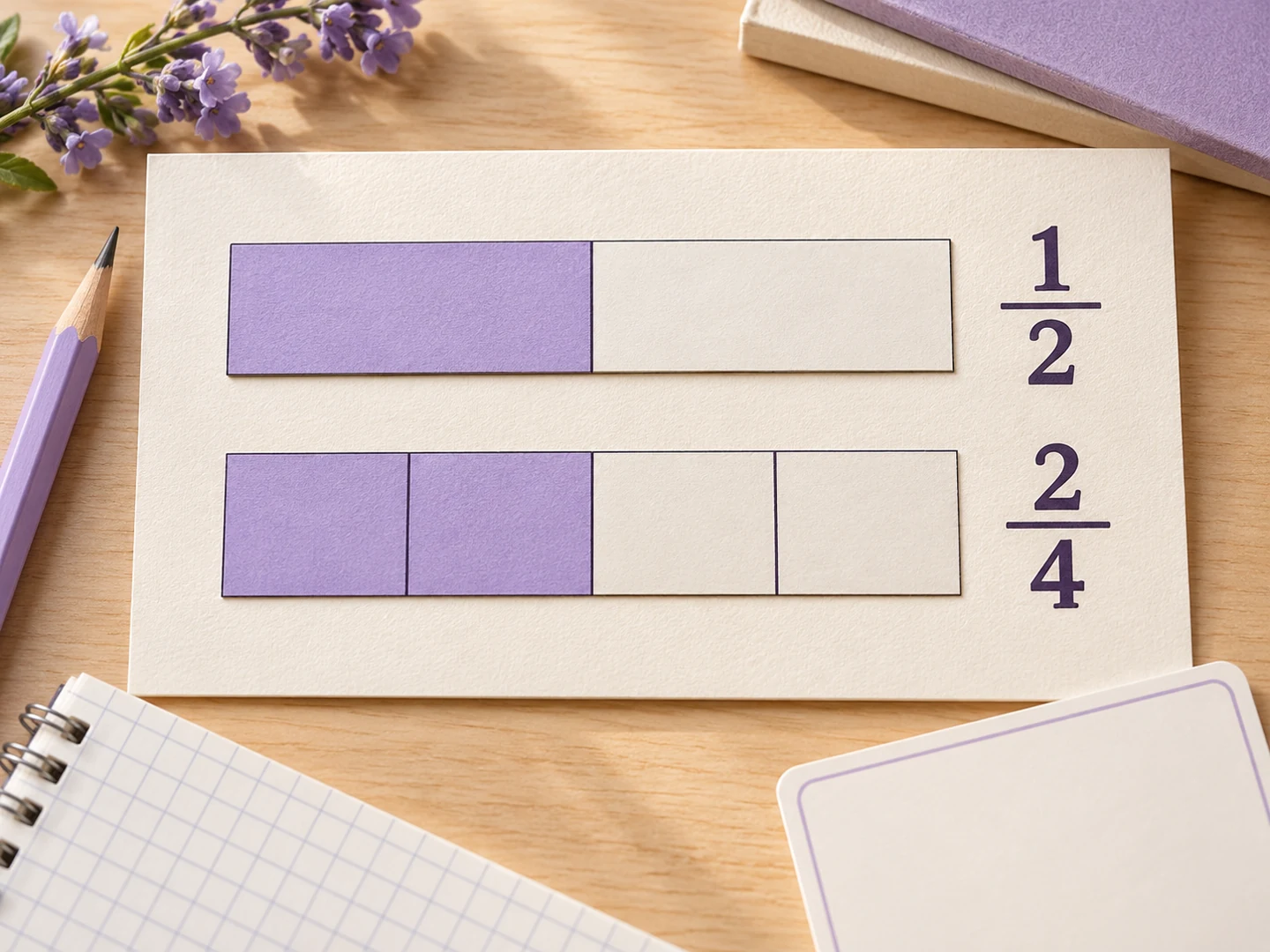
Ten illustrated PDF pages pair five questions with their answers. Choose the pages and pages-per-sheet setting that suit your activity.
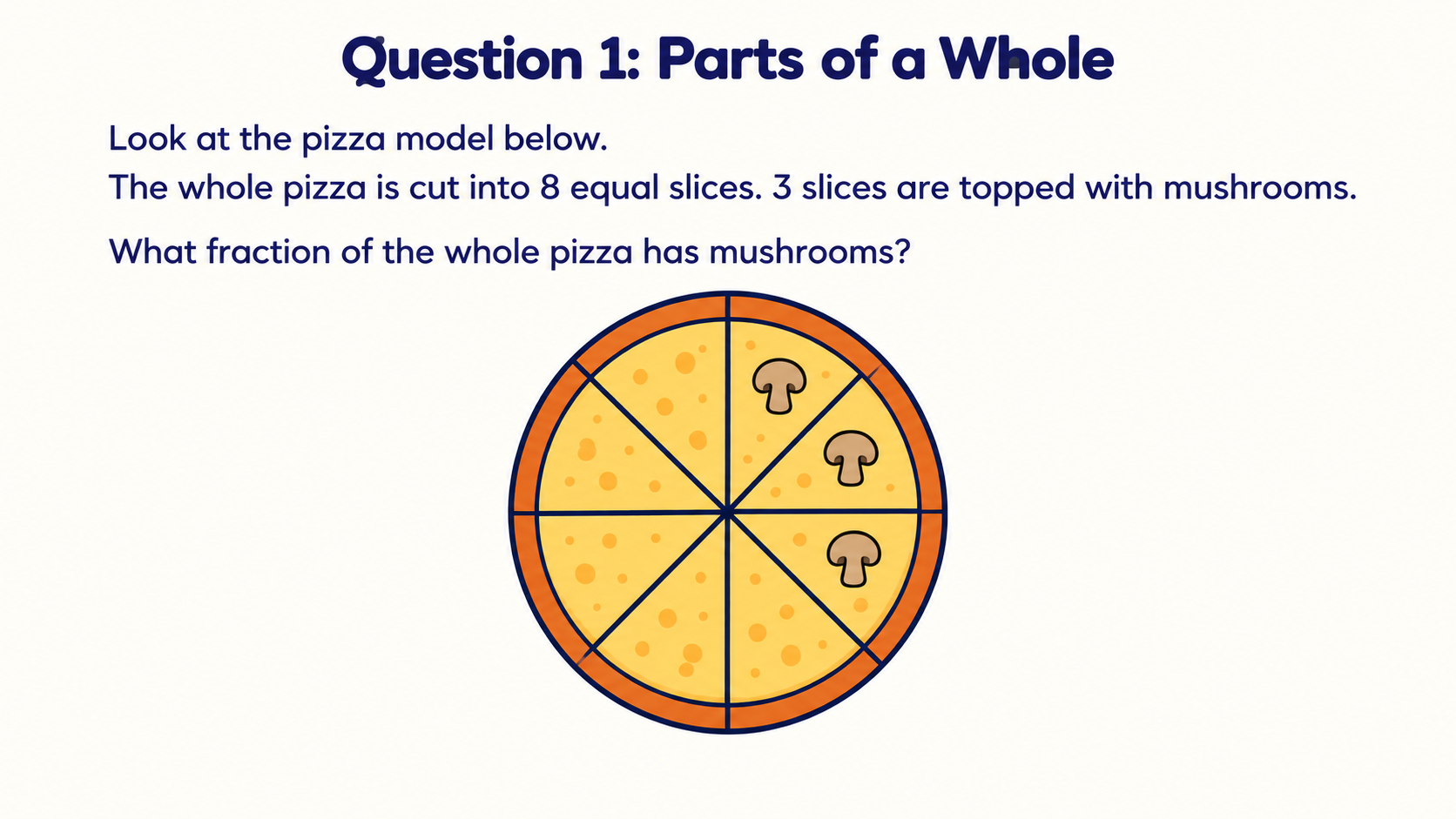
Use the opening question to connect the shaded parts with the numerator and denominator. Download the complete set to work through all five pairs.
Download the Fraction Flashcards PDF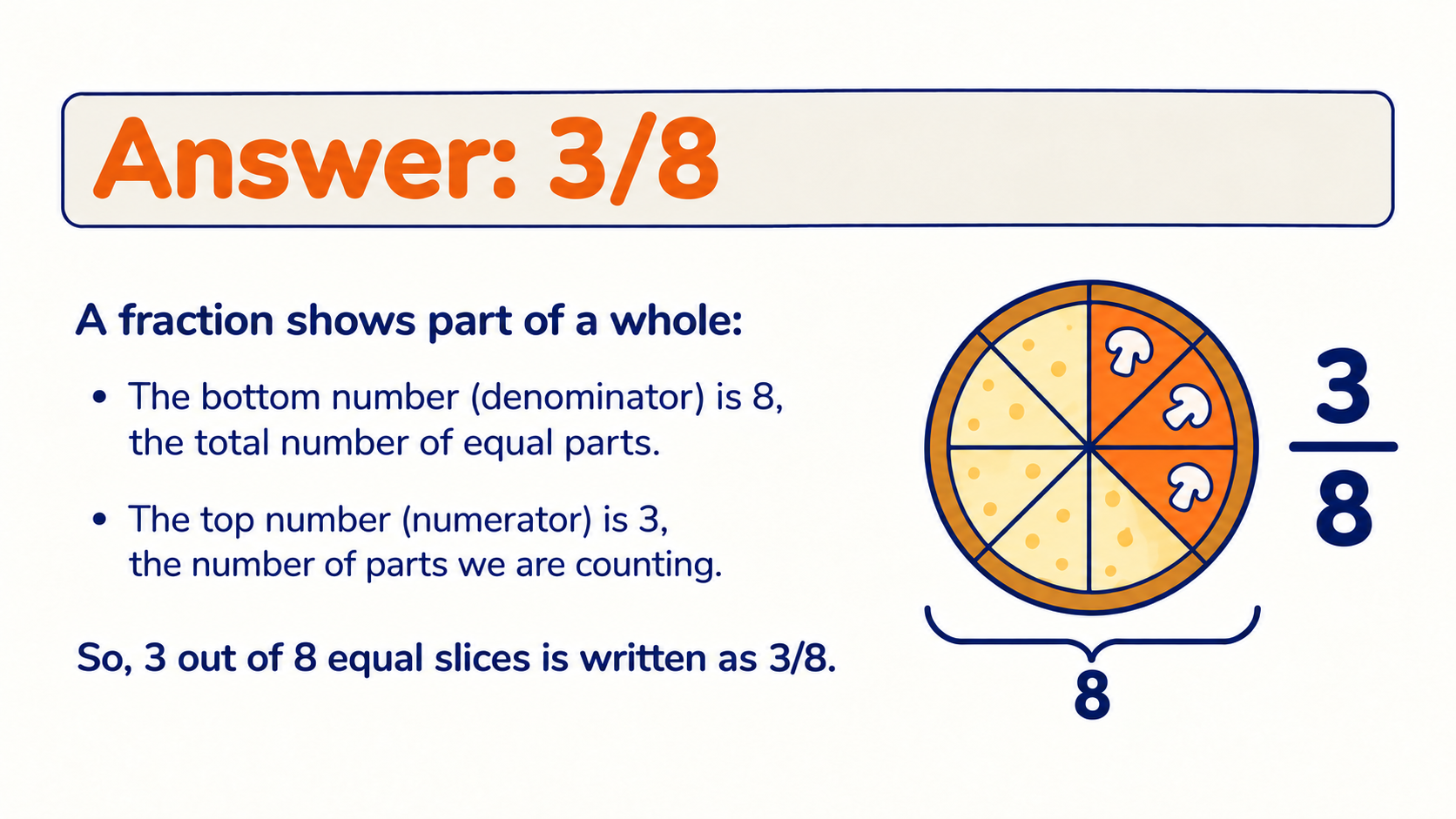
Keep the answer page separate while the learner explains the picture. Bring it back into view when you discuss the reasoning.
Continue with the next question to compare representations. Ask the learner to describe the whole and the equal parts before naming the fraction.
The example includes five question-and-answer pairs about fractions: parts of a whole, equivalent fractions, comparison, addition with like denominators, and a number line. The printable sample contains all ten pages.
This sample emphasizes understanding fractions through visual models. You can create a different set for arithmetic facts by describing the operations, number range, and learner level.
Ask the child to describe the picture and explain an answer before revealing the back. Follow up with another example using a drawing or familiar object.
Yes. Use the PDF download below for the complete five-pair sample. The PDF contains the illustrated pages shown in the preview.
Yes. Use Generate and describe the topic, age group, and level. You can also upload lesson material or paste the questions and concepts you want covered.
Yes. Generate your set and export editable PPTX. Adjust text and visual elements in PowerPoint, then print or present your version.
Connect questions, variables, fair tests, and evidence.
Explain forces and motion with familiar illustrated situations.
Explore eleven complete illustrated sets and download their PDFs.
Make illustrated cards you can take to the study table or classroom.
Explain words, processes, and concepts through scenes and diagrams.
Create illustrated study cards from your material or a topic.
Organize a practice set around your revision topics and goals.
Create a clear question, answer options, and a useful explanation.
Create a set around the concept your learners are working on.