


Cell membrane
The membrane forms a boundary and controls the movement of substances into and out of the cell. Think about both separation and exchange.
Use illustrated questions to connect cell structures with their functions.
Drag and drop your files here.
Paste a link from YouTube, TikTok, X/Twitter, Instagram, Facebook, or any website.
The sample begins with a structure and asks what it does. Use these concise explanations to connect the vocabulary to the biology.
The membrane forms a boundary and controls the movement of substances into and out of the cell. Think about both separation and exchange.
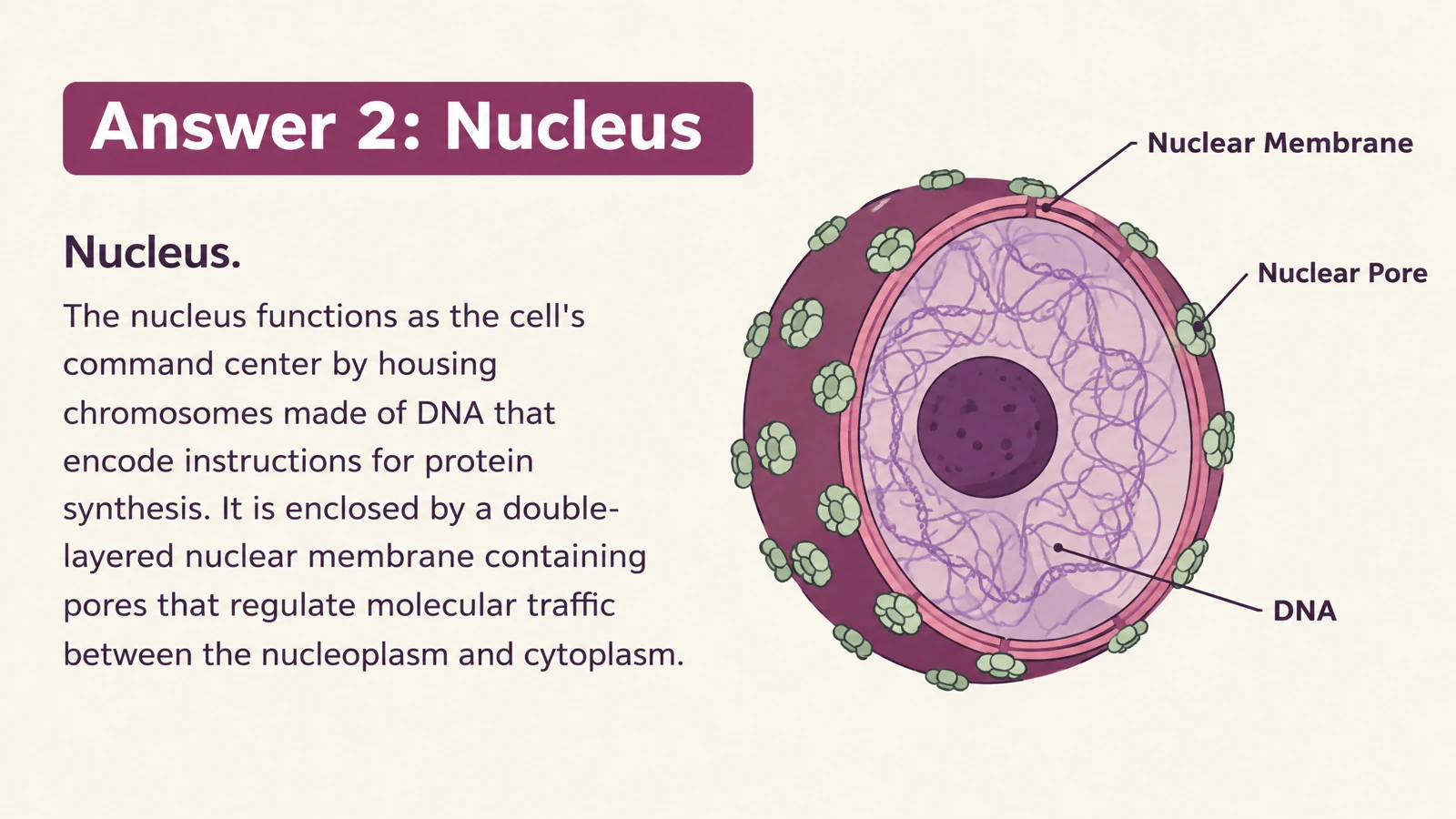
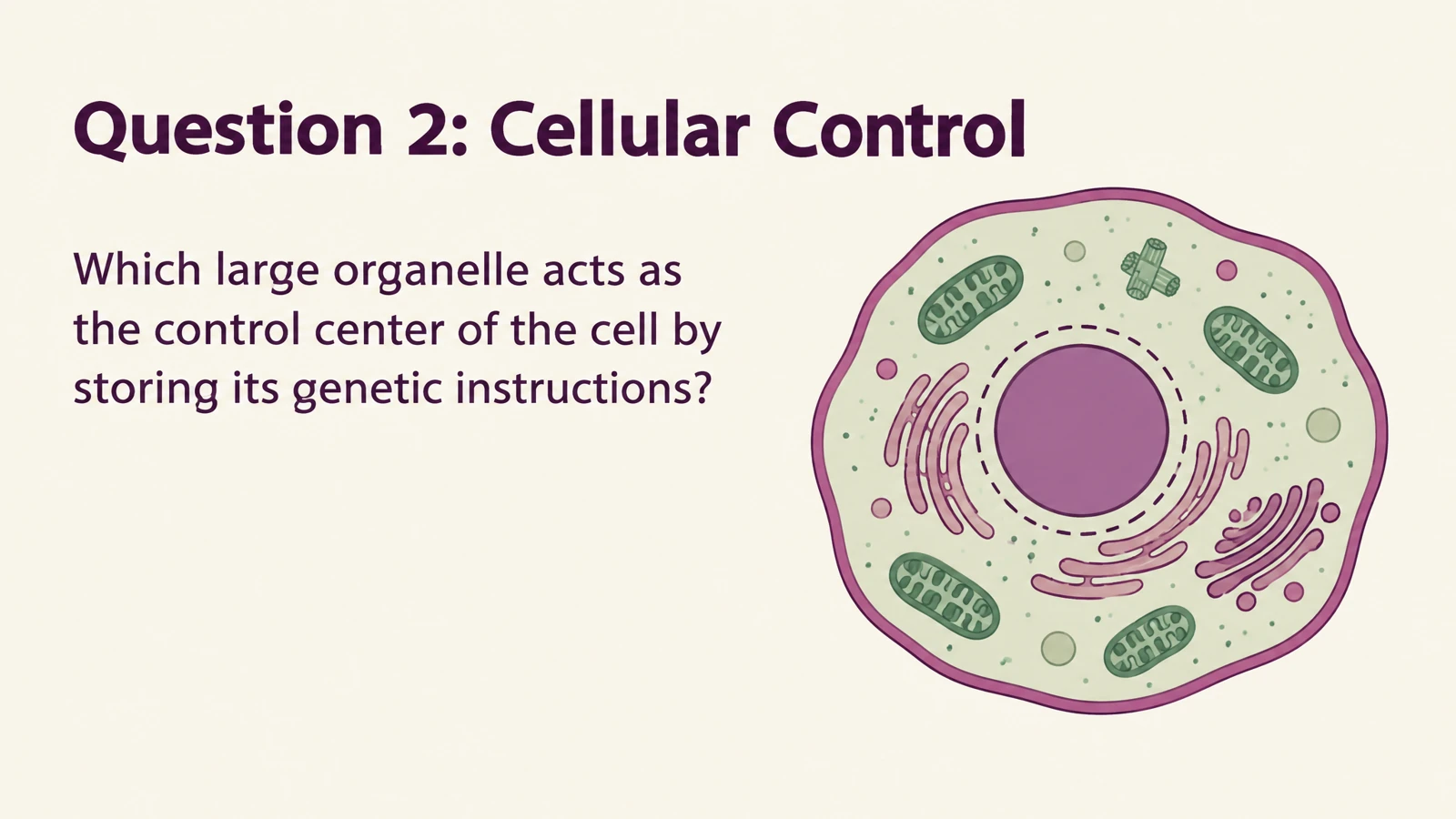
The nucleus contains most of the genetic material in a eukaryotic cell. Its role connects stored information to the cell’s activities.
Mitochondria are involved in aerobic respiration and ATP production. Connect the organelle to the way cells make energy available for their work.
Chloroplasts carry out photosynthesis in plant and algal cells. Their chlorophyll absorbs light used in that process.
Both share structures such as membranes, cytoplasm, nuclei, and mitochondria. Plant cells also have features such as a cellulose cell wall and chloroplasts in photosynthetic tissues.
Practice explaining why a structure matters to a process. A useful card connects a name, a role, and an example rather than treating them as separate facts.
Use a short, focused practice session to connect the answers to what you are learning.
Read the functional clue first and recall the structure. Then reveal the explanation to reconnect the term to its purpose.
Explain how a chloroplast and a mitochondrion contribute to different cellular processes. Keep the comparison focused on what each does.
Create cards about genetics, ecology, transport, or another unit. Add your lesson notes and specify the level of explanation you need.
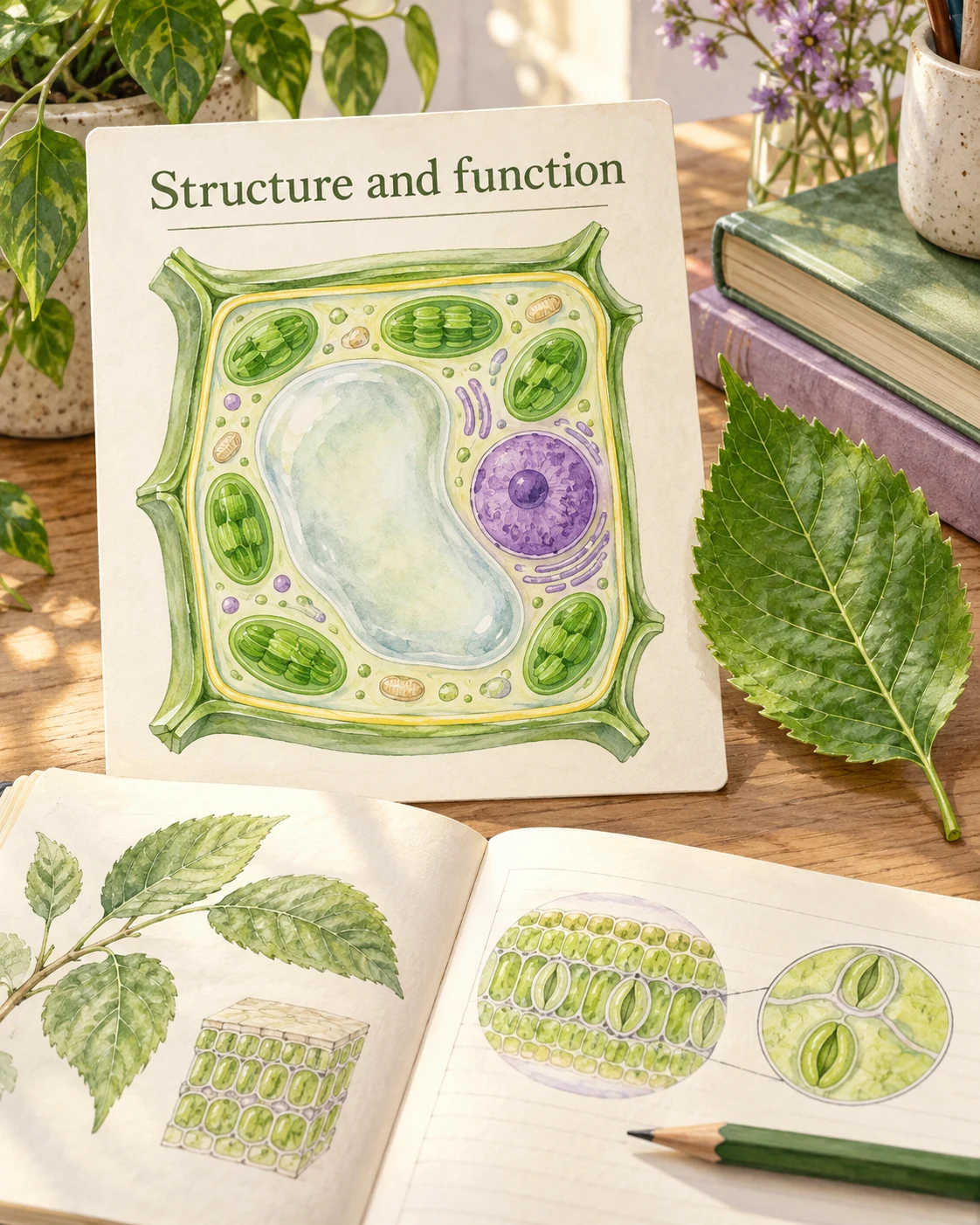
Five illustrated question-and-answer pairs are available in a ten-page PDF. Keep the question visible while discussing the structure, then reveal its explanation.
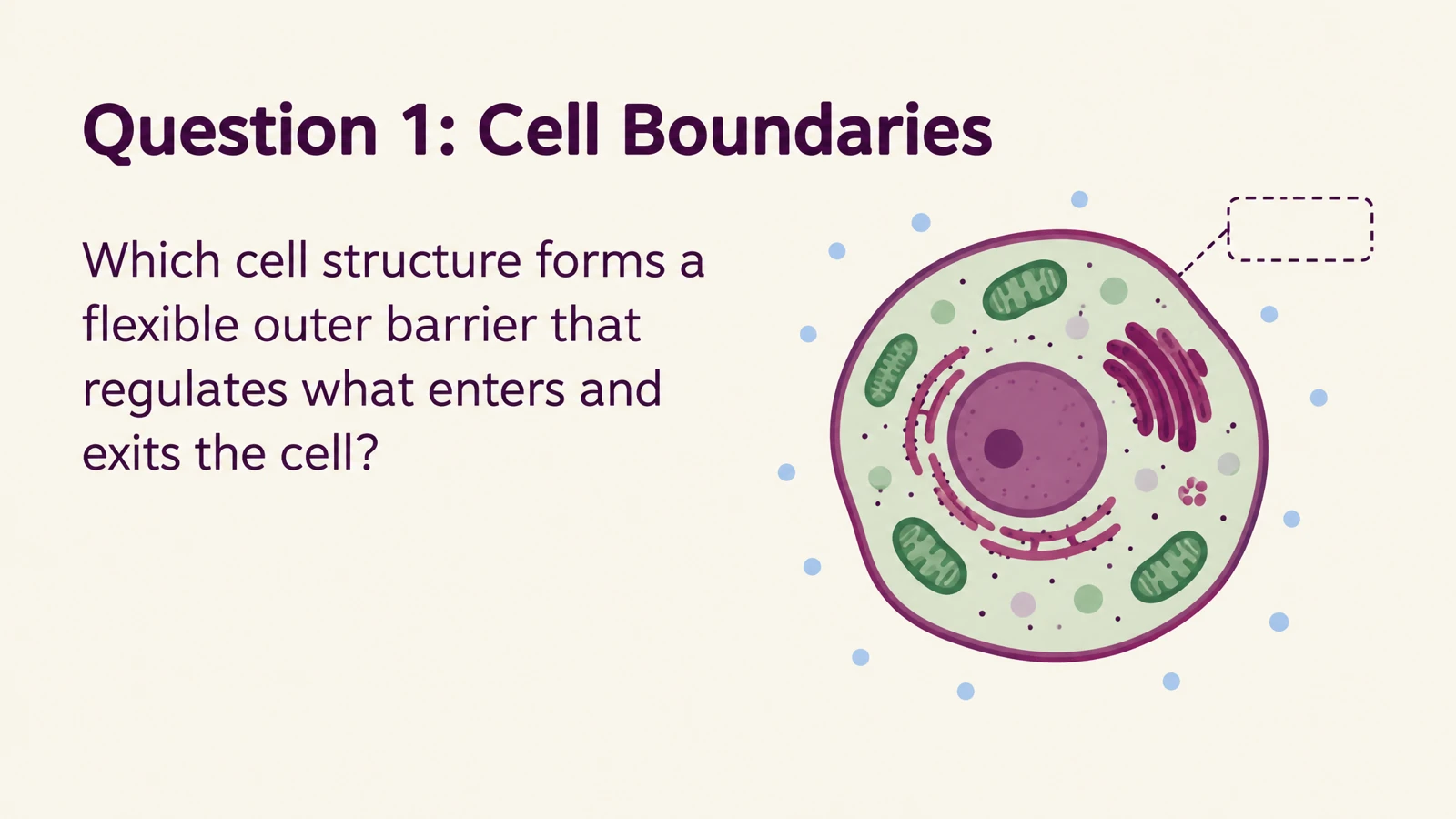
Use the first prompt to connect a structure with the work it does. The download includes the complete cell study set.
Download the Cell Biology PDF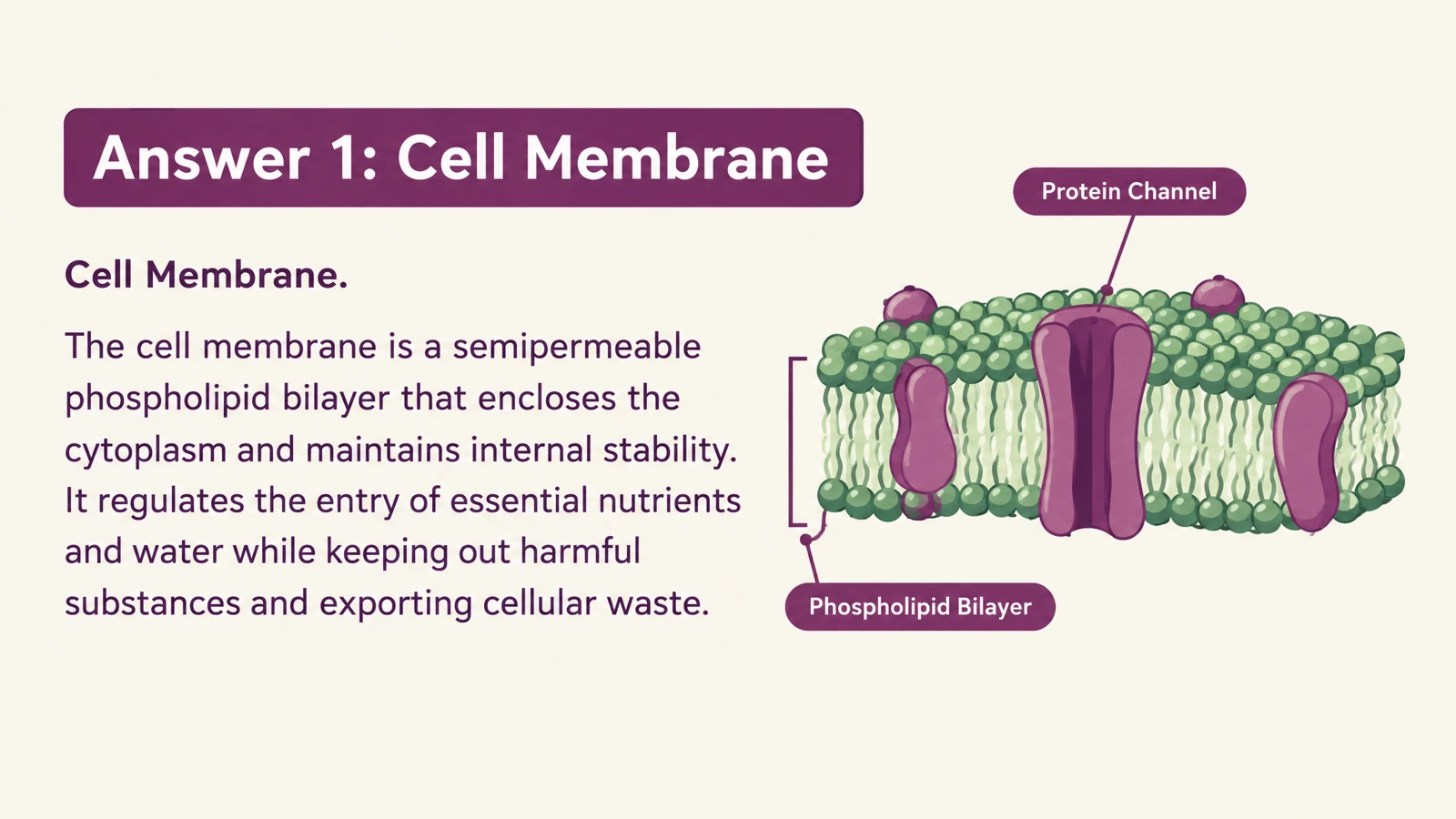
Return to the illustration while explaining the function. Ask how that function contributes to the cell as a whole.
Continue to the next structure and compare its role with the previous one. The PDF keeps the questions and answers in sequence.
The five-pair sample covers cell structures and functions: membrane, nucleus, mitochondria, chloroplasts, and a comparison of plant and animal cells.
Yes. The example introduces structures through their functions. Use the questions to practice explaining the role of each part of the cell.
Yes. Paste your notes or upload course material. Specify the unit and the concepts you want the set to emphasize.
Yes. Describe topics such as genetics, ecology, evolution, or physiology and choose the audience and depth. The example set is a starting point for the format.
Use the question as a prompt to name and explain a structure before revealing the answer. Follow up by describing its relationship to a process or another part of the cell.
Yes. The download includes all five question-and-answer pairs. Print selected pages or keep the set for offline study.
Yes. Generate your own set and export editable PPTX. Adapt the text and visual elements in PowerPoint to fit the lesson.
Study body systems through the functions they perform.
Revisit atoms, ions, and bonding through visual explanations.
Connect questions, variables, fair tests, and evidence.
Build foundational nursing vocabulary with a focused sample set.
Break a chapter into concepts, processes, and examples to recall.
Explore eleven complete illustrated sets and download their PDFs.
Make illustrated cards you can take to the study table or classroom.
Turn a chapter into recall, comparison, and application questions.
Create a set that connects the terms to the living processes.