
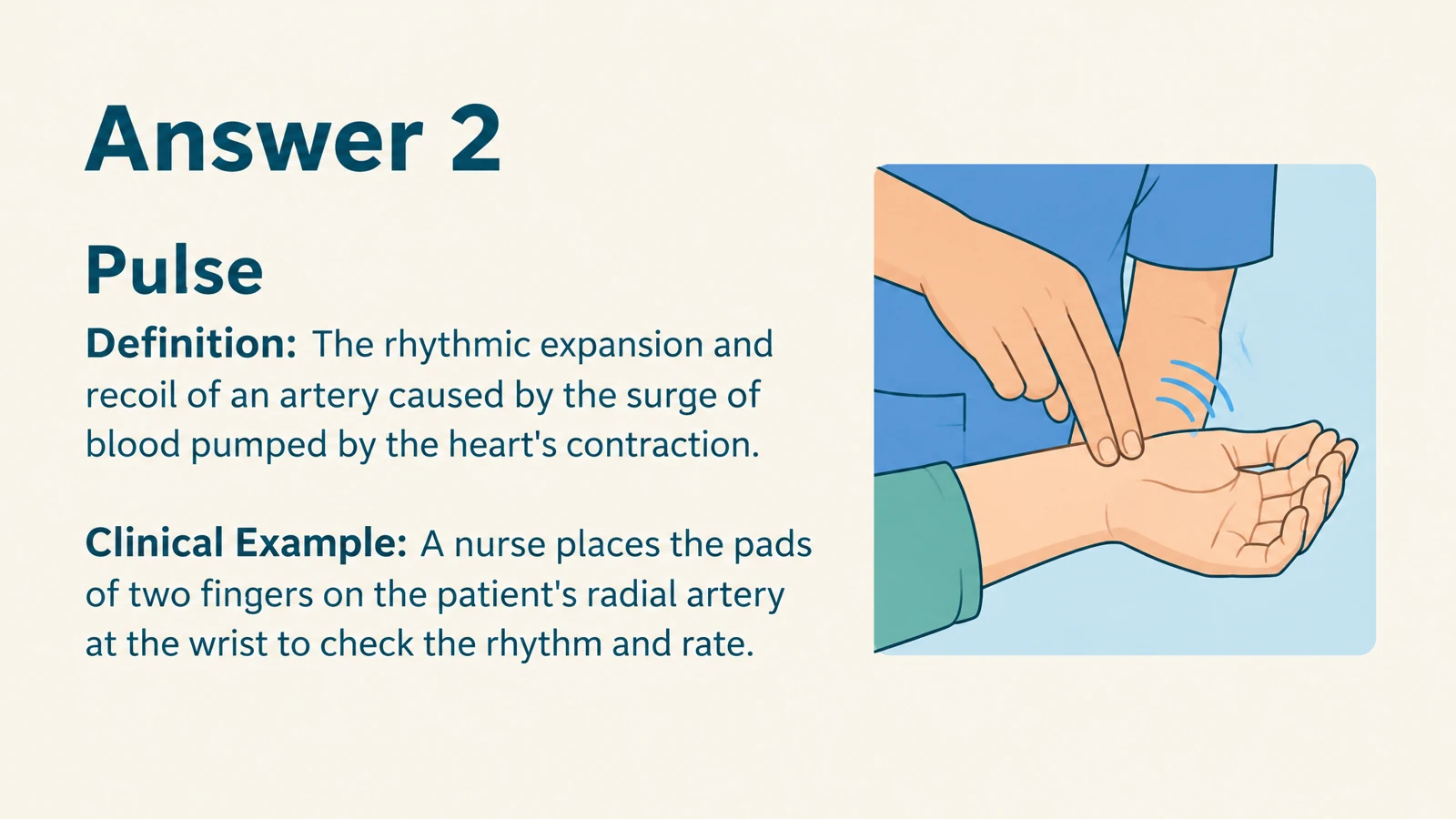


Vital signs
A group of physiological measurements used to describe basic body functions. The term brings together familiar measures such as temperature, pulse, breathing rate, and blood pressure.
Introduce vital signs, pulse, respiration, blood pressure, and asepsis through illustrated vocabulary cards.
Drag and drop your files here.
Paste a link from YouTube, TikTok, X/Twitter, Instagram, Facebook, or any website.
This sample focuses on introductory vocabulary. Use the definitions as language practice alongside the material taught in your course.
A group of physiological measurements used to describe basic body functions. The term brings together familiar measures such as temperature, pulse, breathing rate, and blood pressure.
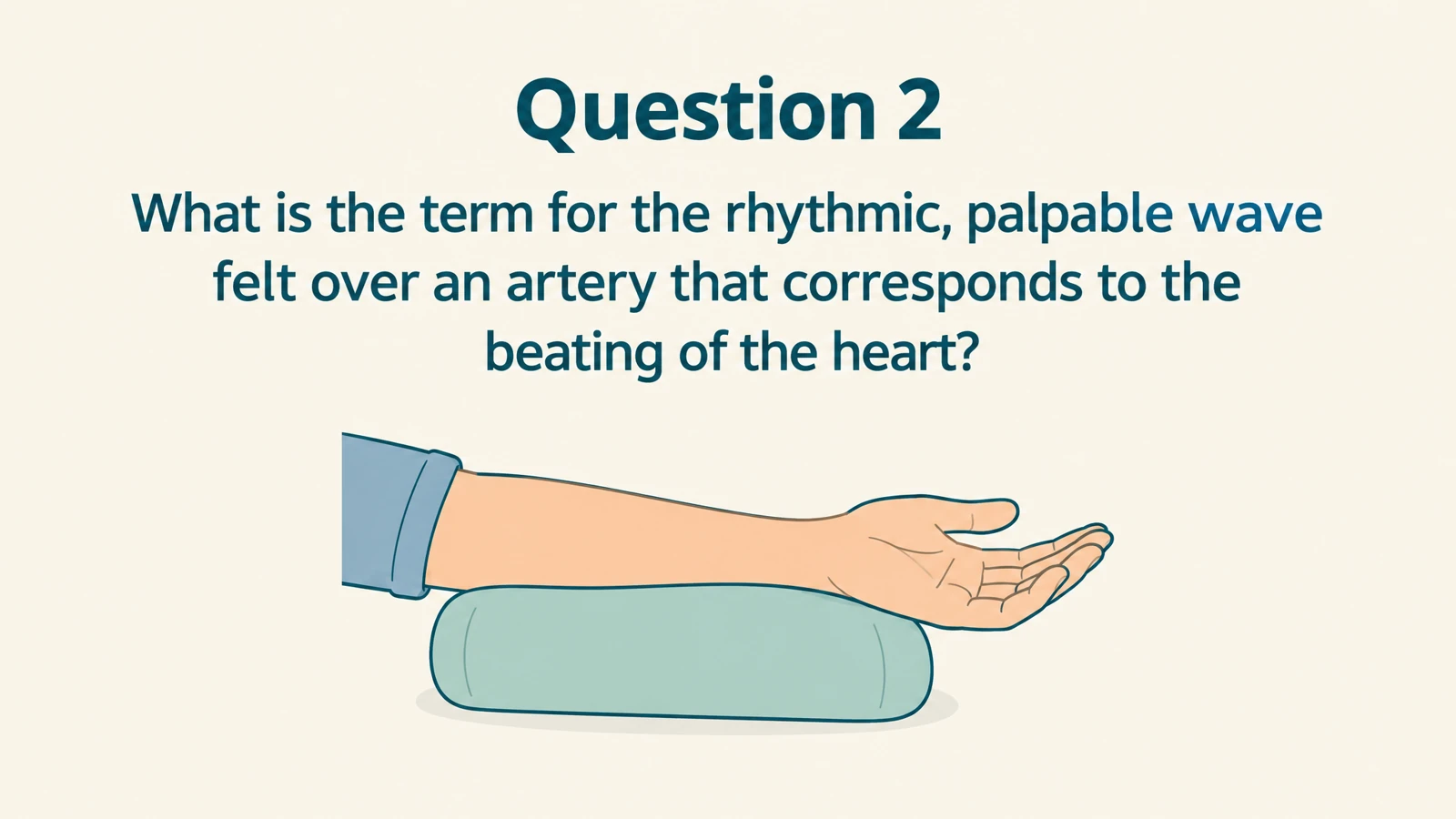
The rhythmic pressure wave felt in an artery as the heart pumps blood. Connect the word to the heartbeat and circulation.
In the context of this introductory set, respiration refers to breathing: the movement of air into and out of the lungs.
The pressure of circulating blood against blood-vessel walls. The sample connects the term to the familiar measurement context.
The state of being free from disease-causing microorganisms. The term connects to practices intended to prevent contamination.
Explain each term in a complete sentence rather than memorizing an isolated label. Then describe how it connects to the topic being taught in your course.
Use a short, focused practice session to connect the answers to what you are learning.
Read the question and name the concept before revealing the answer. Restate the explanation using your own words.
Group related vocabulary from a lecture or reading. Explain how the terms differ and how they are used together.
Upload your teaching material or paste a terminology list. Specify the audience, topic, and depth so the cards fit the course you are studying.
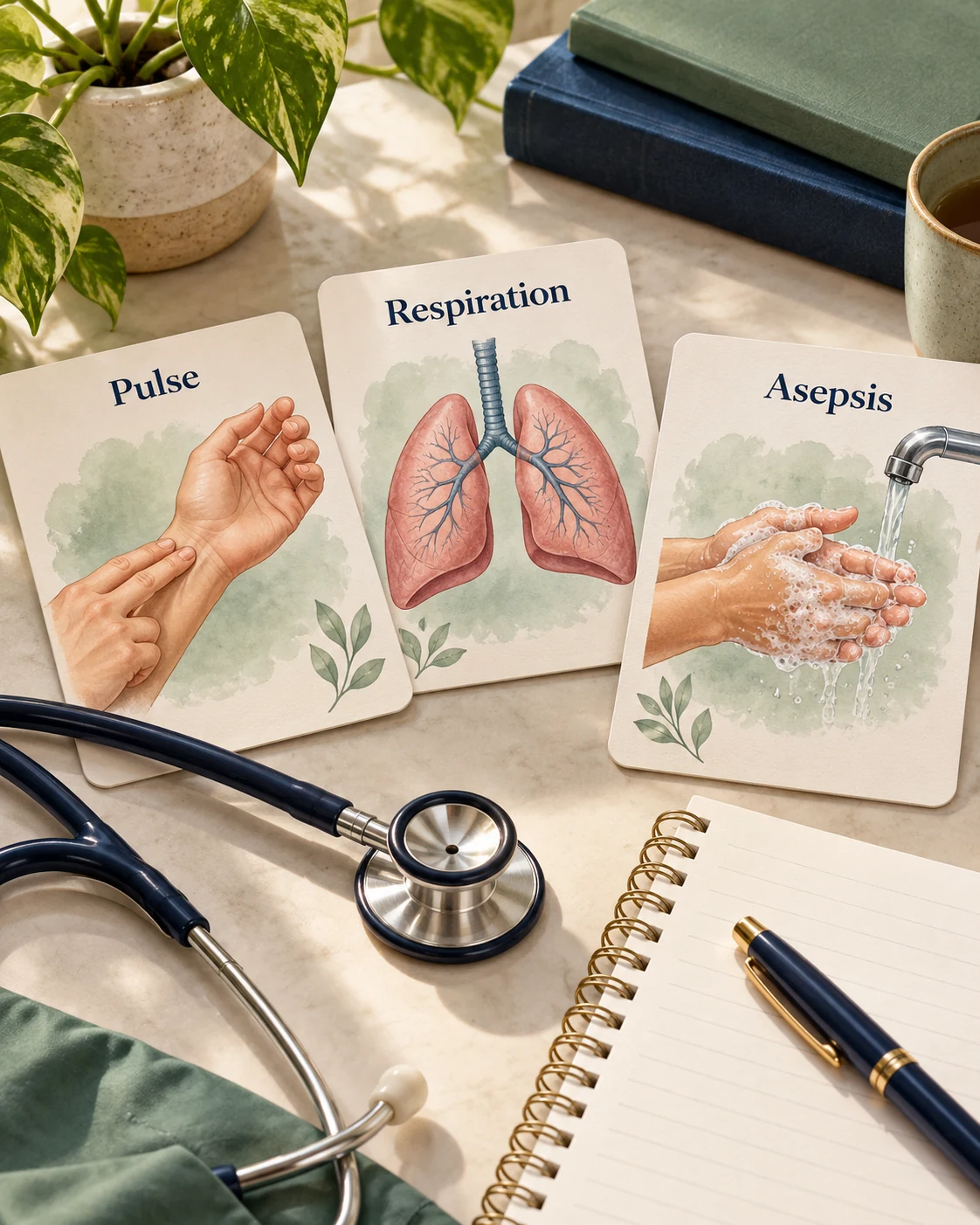
The ten-page PDF contains five illustrated question-and-answer pairs for introductory nursing terminology. Print it as a compact companion to your course notes.
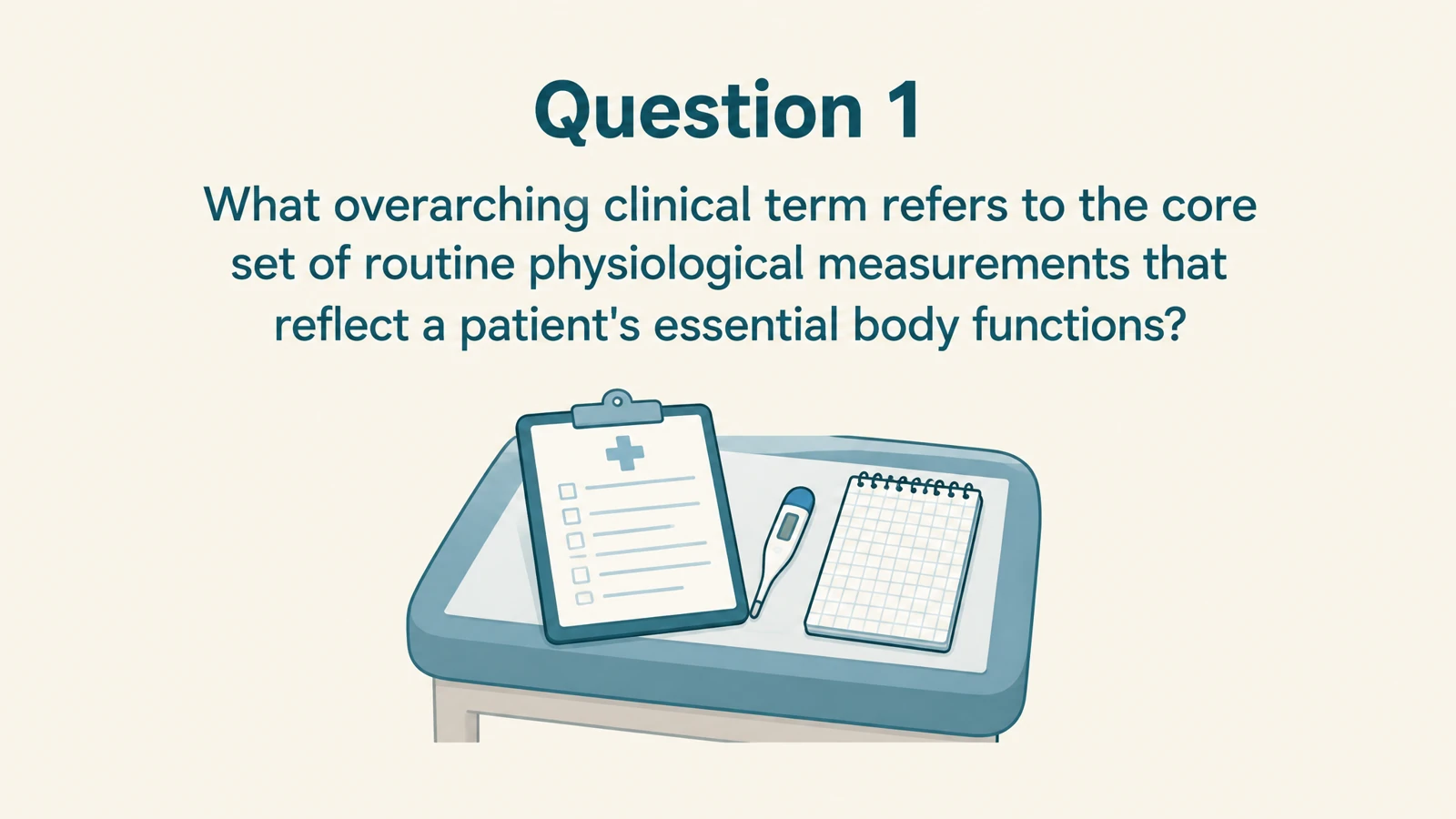
Use the first question to explain what the term describes. Download the complete sample to keep all five introductory pairs together.
Download the Nursing Vocabulary PDF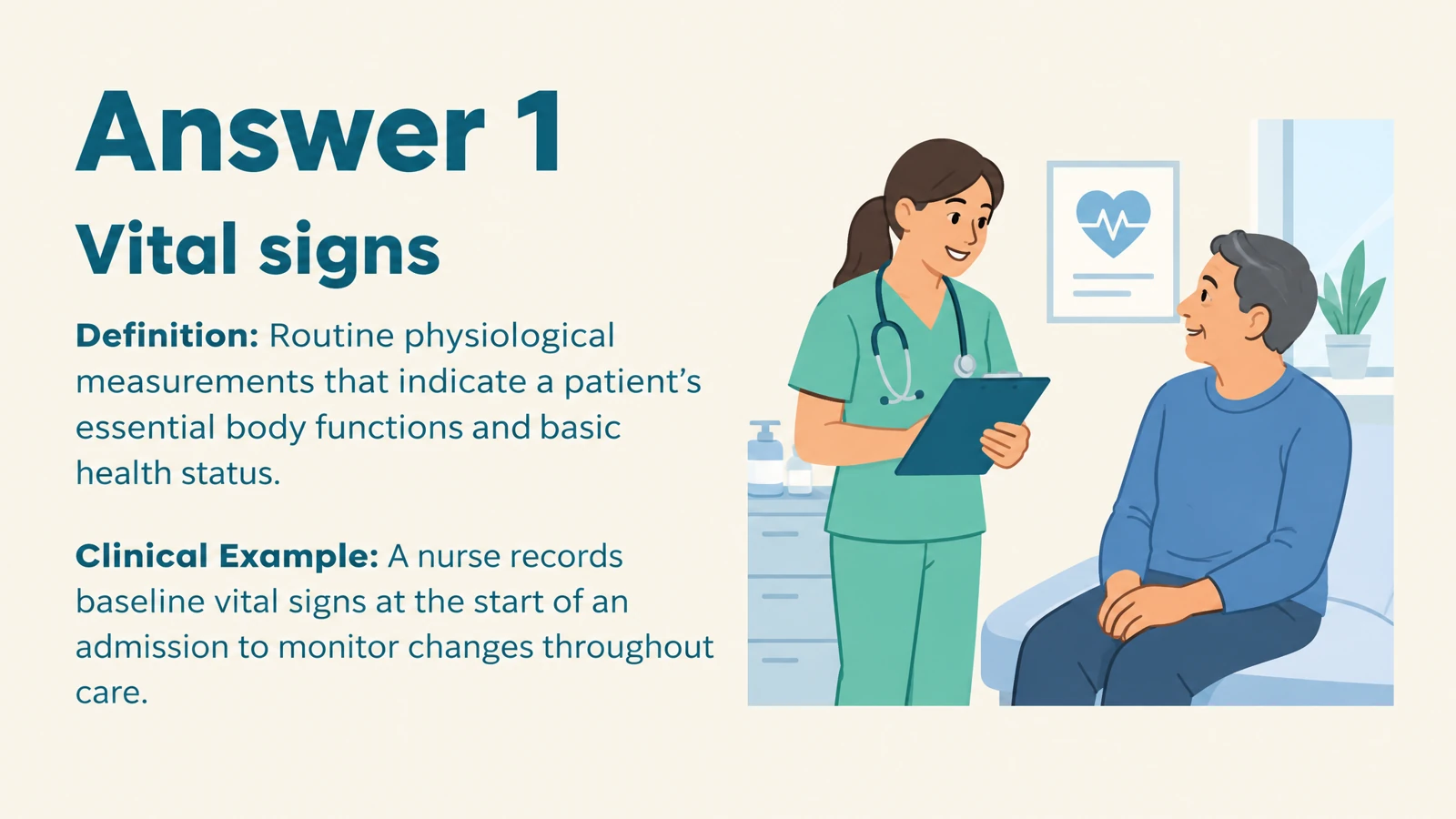
Reveal the answer after describing the concept in your own words. Connect it with the terminology used in your current class.
Move through the sample and keep related terms distinct. Select the pages you want to revisit during a short vocabulary session.
The five question-and-answer pairs cover vital signs, pulse, respiration, blood pressure, and asepsis. The focus is foundational vocabulary.
It is an introductory vocabulary resource for learners beginning to study nursing concepts. You can generate another set with the level and topic specified in your course.
Yes. Upload the notes or paste the relevant material. Name the concepts and learner level so the set follows your study goals.
Yes. Provide the module material or a topic description and specify the vocabulary, relationships, or explanations you want to practice.
Recall the term, explain it in a sentence, then reveal the answer. Use the cards as a focused way to revisit the terminology in your learning material.
Yes. The download contains all five pairs as ten illustrated pages. Print selected pages or keep the file for offline study.
Yes. Export editable PPTX and adapt the wording and visual elements in PowerPoint for your study session or teaching presentation.
Study body systems through the functions they perform.
Connect cell structures with their functions in an illustrated set.
Revisit atoms, ions, and bonding through visual explanations.
Prepare to explain a paper's question, methods, and findings.
Give lecture notes and pasted text a question side for revision.
Explore eleven complete illustrated sets and download their PDFs.
Make illustrated cards you can take to the study table or classroom.
Organize a practice set around your revision topics and goals.
Create cards around the nursing concepts you are studying now.