


What particles make up an atom?
Protons and neutrons are in the nucleus, with electrons occupying regions around it. Their charges and arrangement help explain atomic behavior.
Explain atomic structure, ions, and chemical bonds through illustrated questions and visual models.
Drag and drop your files here.
Paste a link from YouTube, TikTok, X/Twitter, Instagram, Facebook, or any website.
Use the set to connect particle-level ideas. Each explanation gives you a starting point for describing what changes and what stays the same.
Protons and neutrons are in the nucleus, with electrons occupying regions around it. Their charges and arrangement help explain atomic behavior.
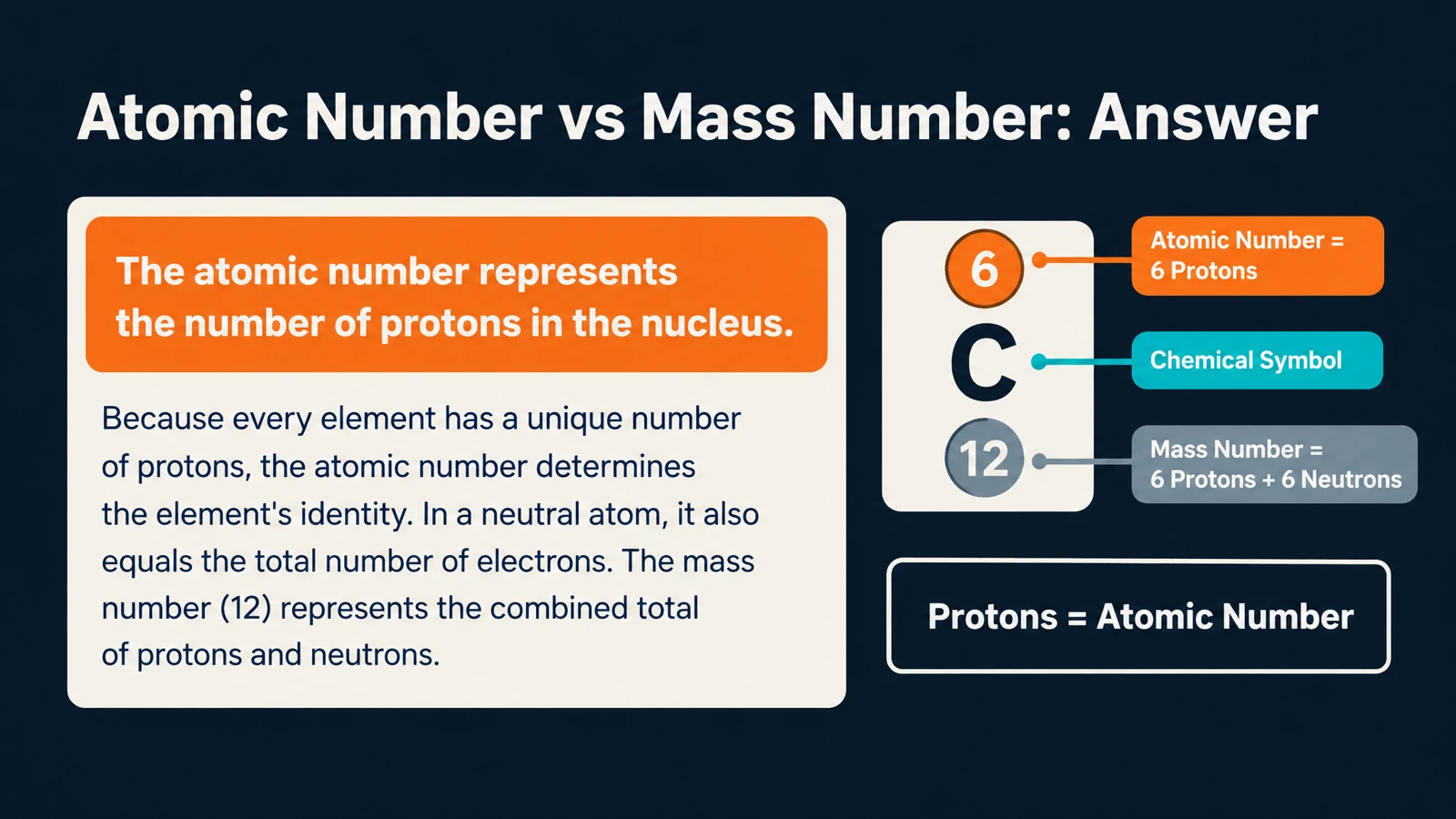
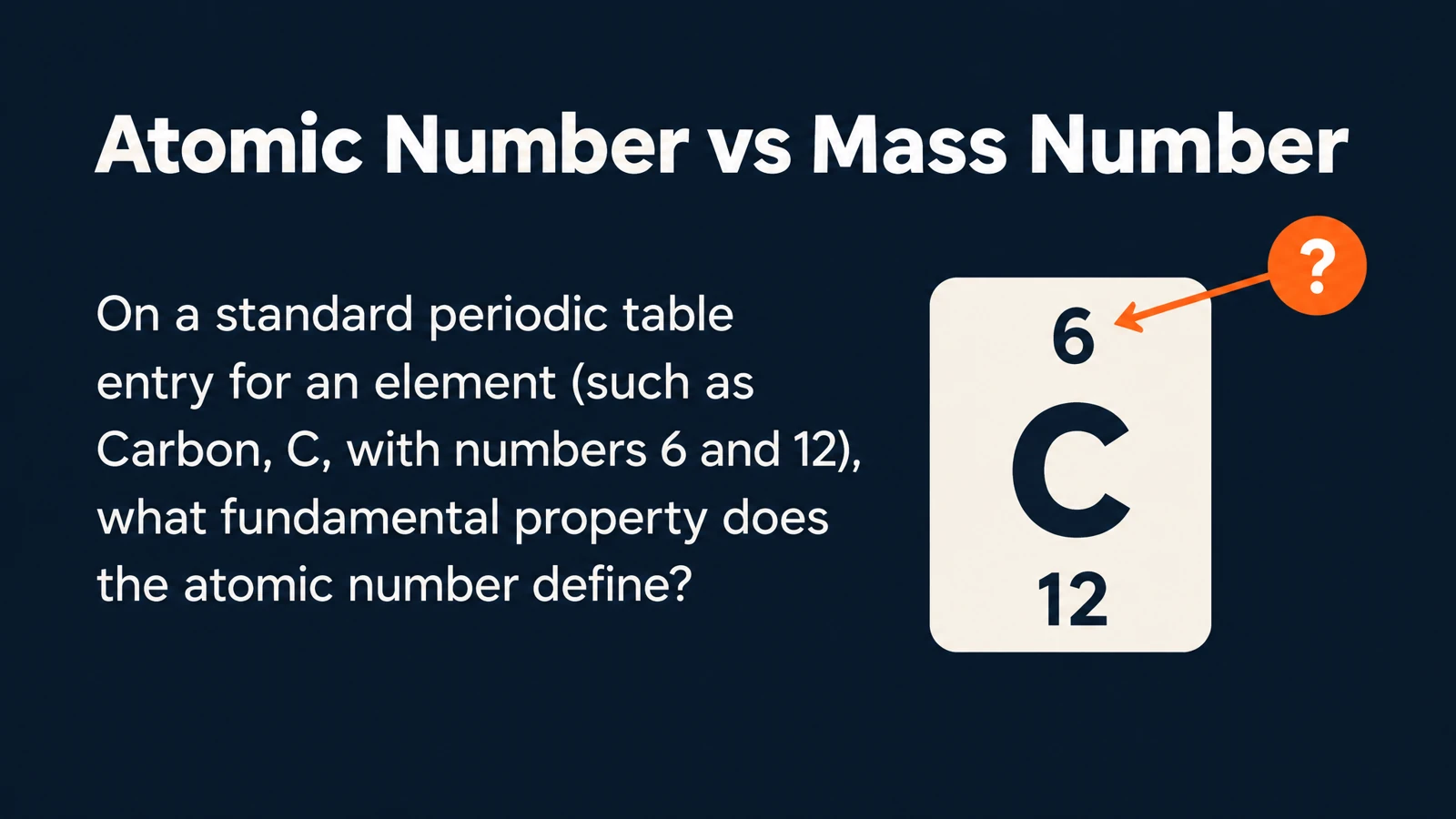
Atomic number is the number of protons in the nucleus. It identifies the element; mass number counts protons and neutrons together.
Losing electrons produces a positively charged ion, while gaining electrons produces a negatively charged ion. The number of protons remains unchanged.
Electrostatic attraction between oppositely charged ions. The familiar metal-and-nonmetal example connects electron transfer to the ions that form.
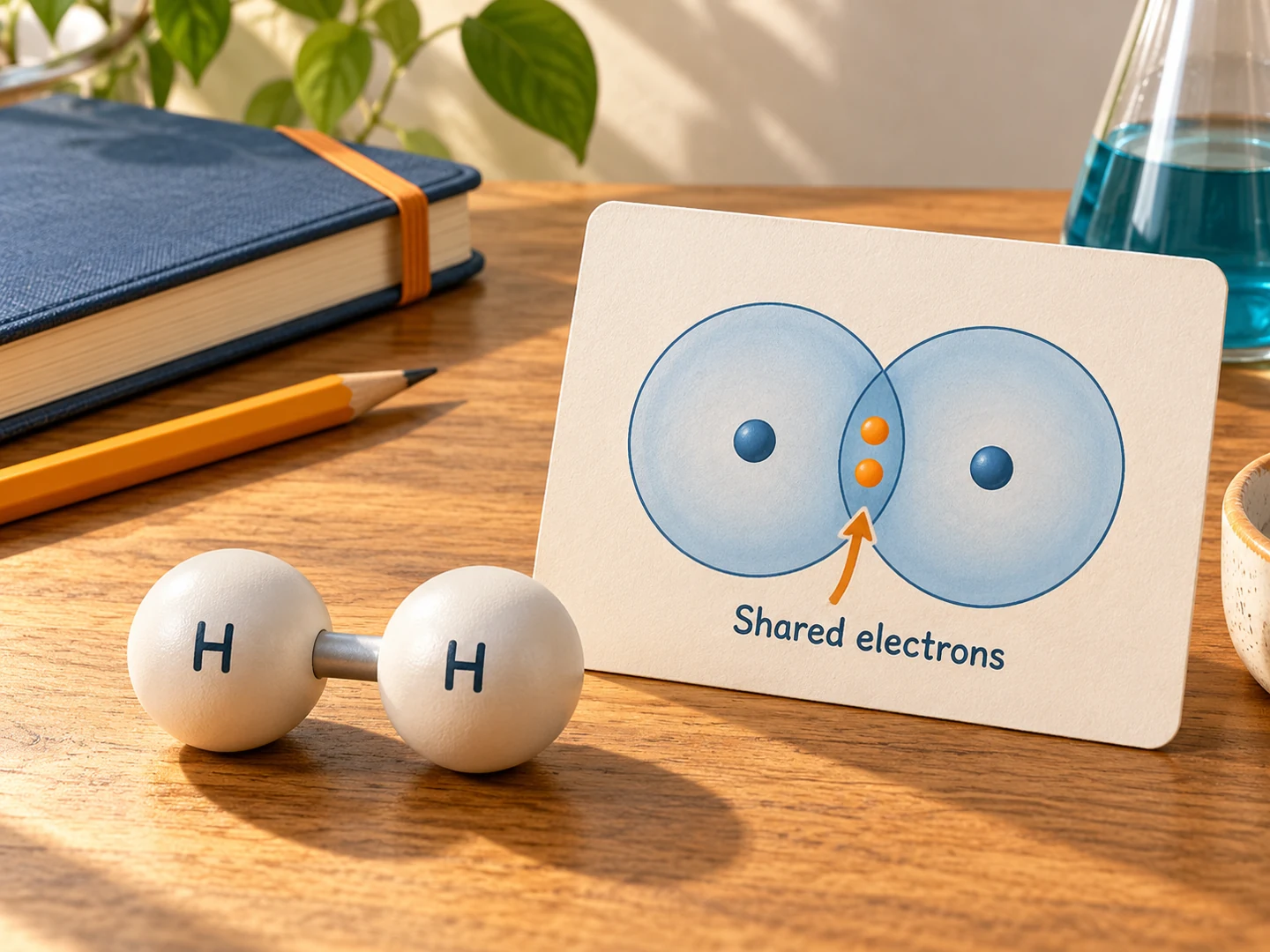
A covalent bond involves atoms sharing a pair of electrons. Connect the shared pair to both atoms when explaining the bond.
Ask what happens to electrons in each example: transfer leading to ions, or sharing in a covalent bond. Keeping that distinction clear makes the vocabulary useful.
Use a short, focused practice session to connect the answers to what you are learning.
A simple model makes the reasoning visible: in a hydrogen molecule, two atoms share a pair of electrons. Use that idea as a starting point for comparing the changes described by the cards.
Track the particles: When a question involves an ion, describe the electron change and the resulting charge. Keep the identity of the element connected to its protons.
Compare two bonding examples: Explain how an ionic example differs from a covalent one. Use the visual models as prompts for the words you choose.
Build the next revision set: Create cards on the periodic table, reactions, acids and bases, or another course unit. Add notes and specify the depth you need.
The downloadable PDF contains ten pages: five questions and five illustrated answers. Print selected pages for a focused comparison or keep the complete sequence.
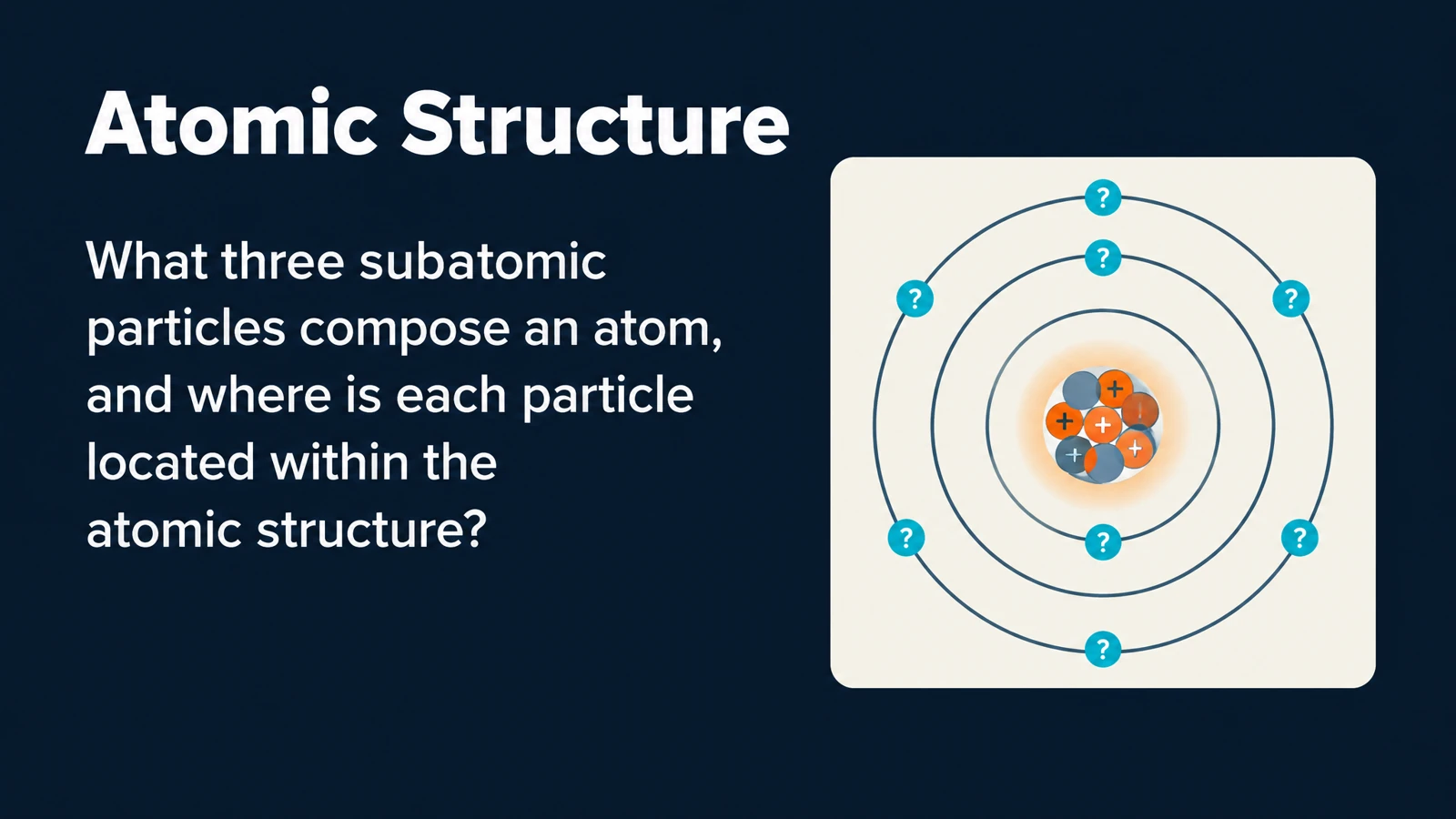
Use the first question to name the particles involved. Download the whole set to continue through atoms, ions, and bonding.
Download the Chemistry Flashcards PDF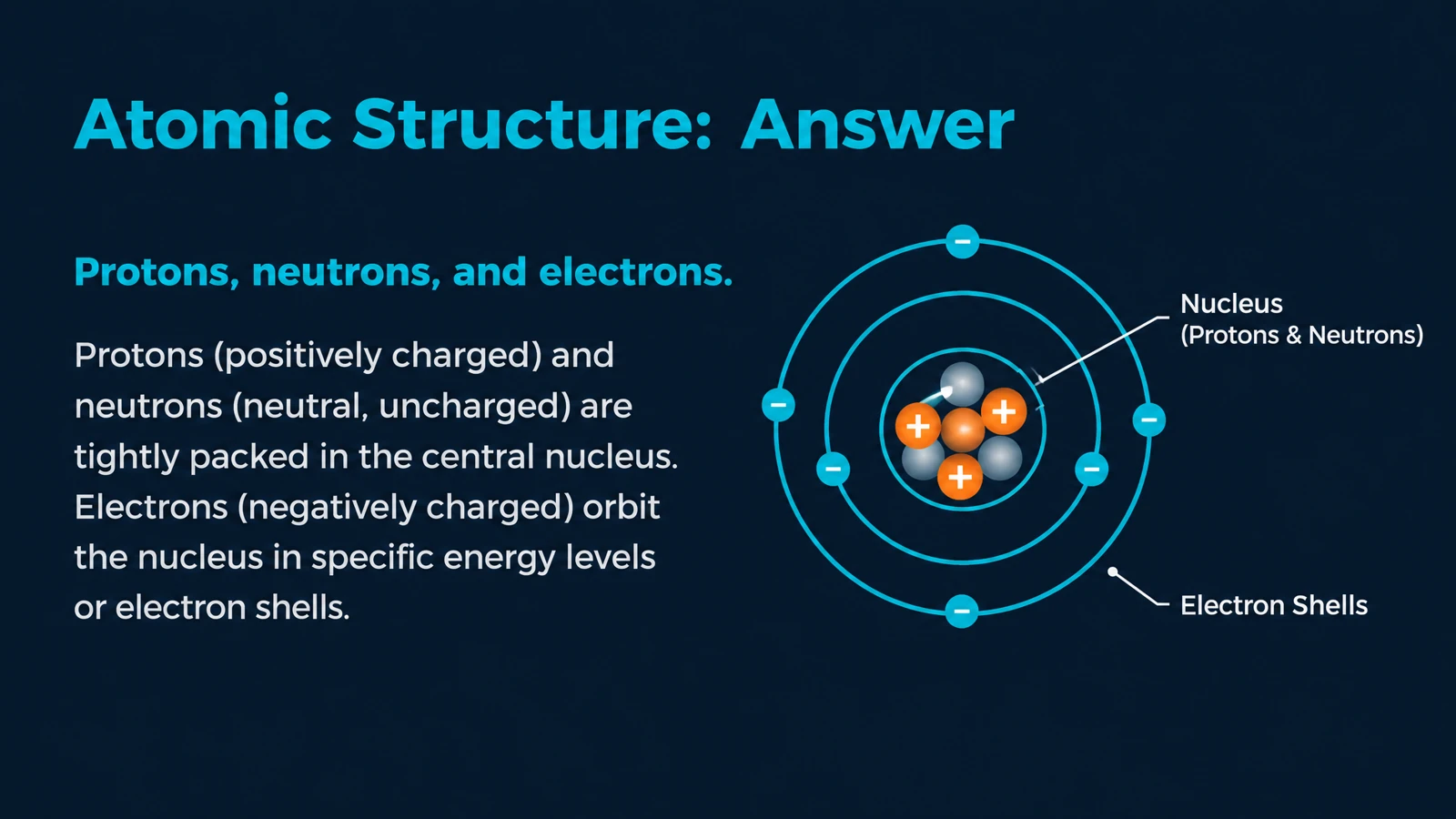
Explain the answer in terms of what the particles do. Keep the visual model beside your notes while making the connection.
Move on to the next question and describe what stays the same and what changes. Compare the explanations when two terms seem similar.
The five pairs cover atomic structure, atomic number and mass number, ion formation, ionic bonding, and covalent bonding.
Use the question to explain what the electrons do and what holds the particles together. The visual answer gives you a model to connect to the terminology.
Yes. Specify the unit and learner level, or add your course material. Request the concepts, comparisons, and examples you want to practice.
Describe the equations and the kind of practice you want, such as interpreting symbols or explaining a reaction. You can edit the exported PPTX to adapt the finished card layout.
Yes. The PDF link contains the complete five-pair set shown in the preview. Print selected pages or keep it for offline review.
Yes. Ask learners to explain the model before revealing the answer. Use the follow-up to connect the visual representation to the words used in the lesson.
Yes. Export editable PPTX and adjust the text, examples, and visual elements before printing or presenting.
Explain forces and motion with familiar illustrated situations.
Connect cell structures with their functions in an illustrated set.
Connect questions, variables, fair tests, and evidence.
Explore fraction models, comparisons, and printable math practice.
Break a chapter into concepts, processes, and examples to recall.
Explore eleven complete illustrated sets and download their PDFs.
Organize a practice set around your revision topics and goals.
Make illustrated cards you can take to the study table or classroom.
Create cards that connect the particles to the concept.