


Skeletal system
Bones and joints provide support and protection and form a framework for movement. The skeleton also has roles in mineral storage and blood-cell production.
Connect five major body systems with their roles in movement, circulation, breathing, and digestion.
Drag and drop your files here.
Paste a link from YouTube, TikTok, X/Twitter, Instagram, Facebook, or any website.
This introductory set asks you to recognize a system from its function. Use the explanations to connect the role to its key structures.
Bones and joints provide support and protection and form a framework for movement. The skeleton also has roles in mineral storage and blood-cell production.
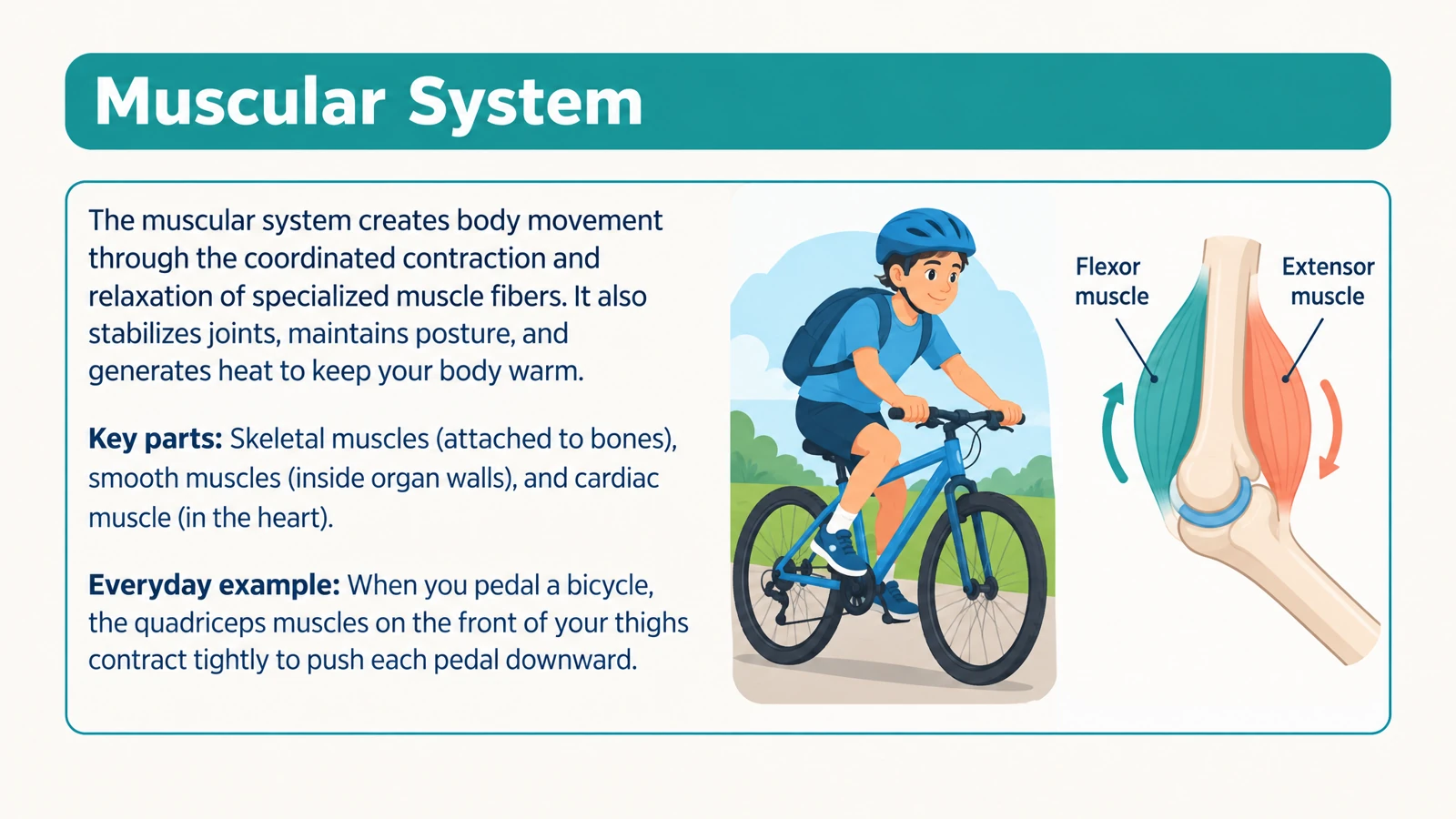
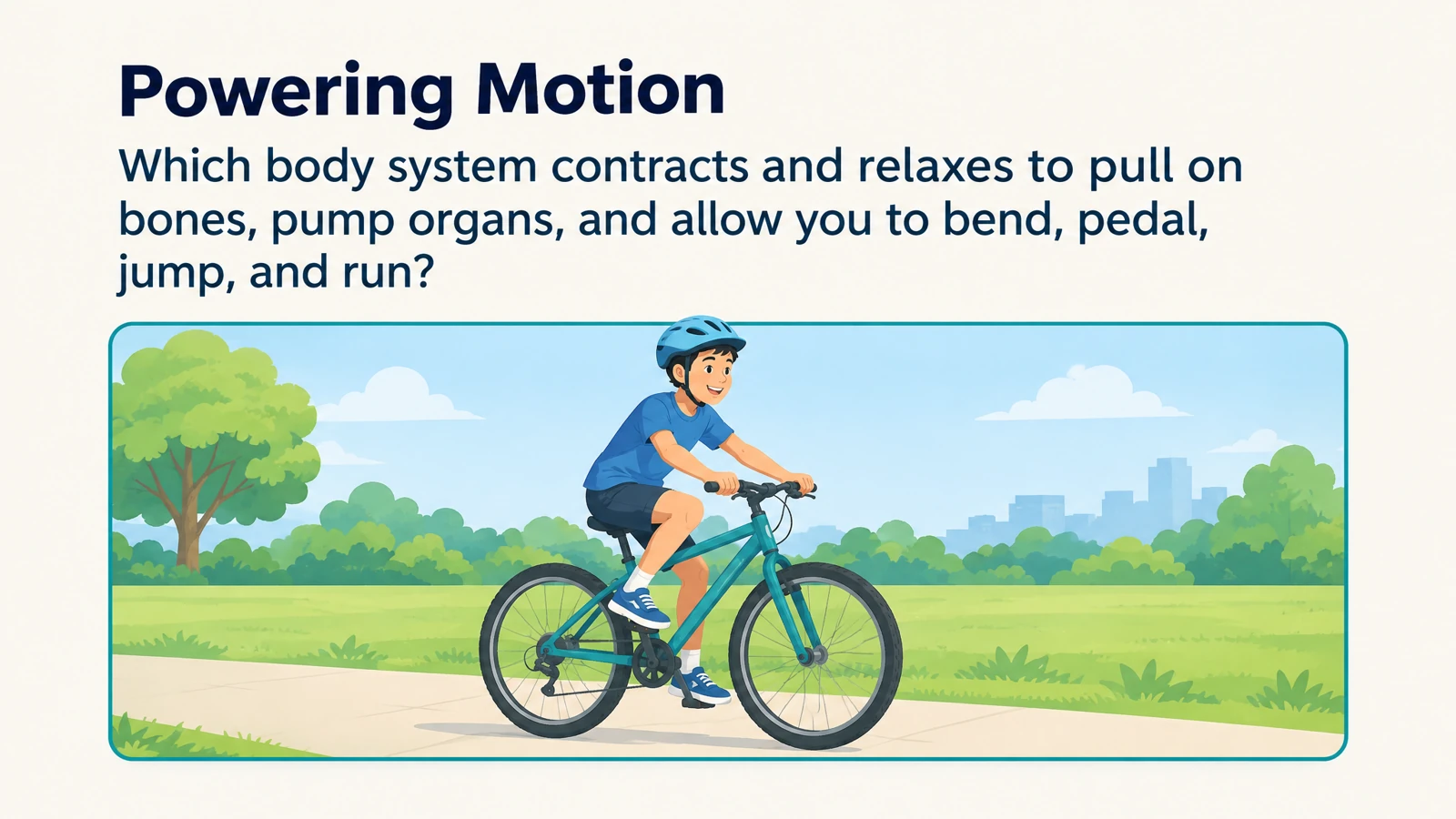
Muscles produce force through contraction. Skeletal muscles contribute to body movement, while other muscle types have roles in the heart and internal organs.
The heart and blood vessels move blood around the body. This transport connects tissues with oxygen and nutrients and carries substances away.
The airways and lungs support gas exchange with the environment. Oxygen enters the body through the lungs and carbon dioxide is released.
The digestive tract breaks food down and absorbs nutrients. Its organs contribute different parts of the process, from mechanical breakdown to absorption.
Walking uphill involves support, muscle contraction, circulation, and breathing together. Explain each system’s contribution to turn a list of names into a connected picture.
Use a short, focused practice session to connect the answers to what you are learning.
Start with a role such as transport or support and name the system. Then give an example of a structure involved.
Use movement, eating, or breathing as a prompt. Describe how several systems contribute to the same activity.
Ask for a region, organ group, or anatomical vocabulary from your course. Specify the learner level and the relationships to emphasize.
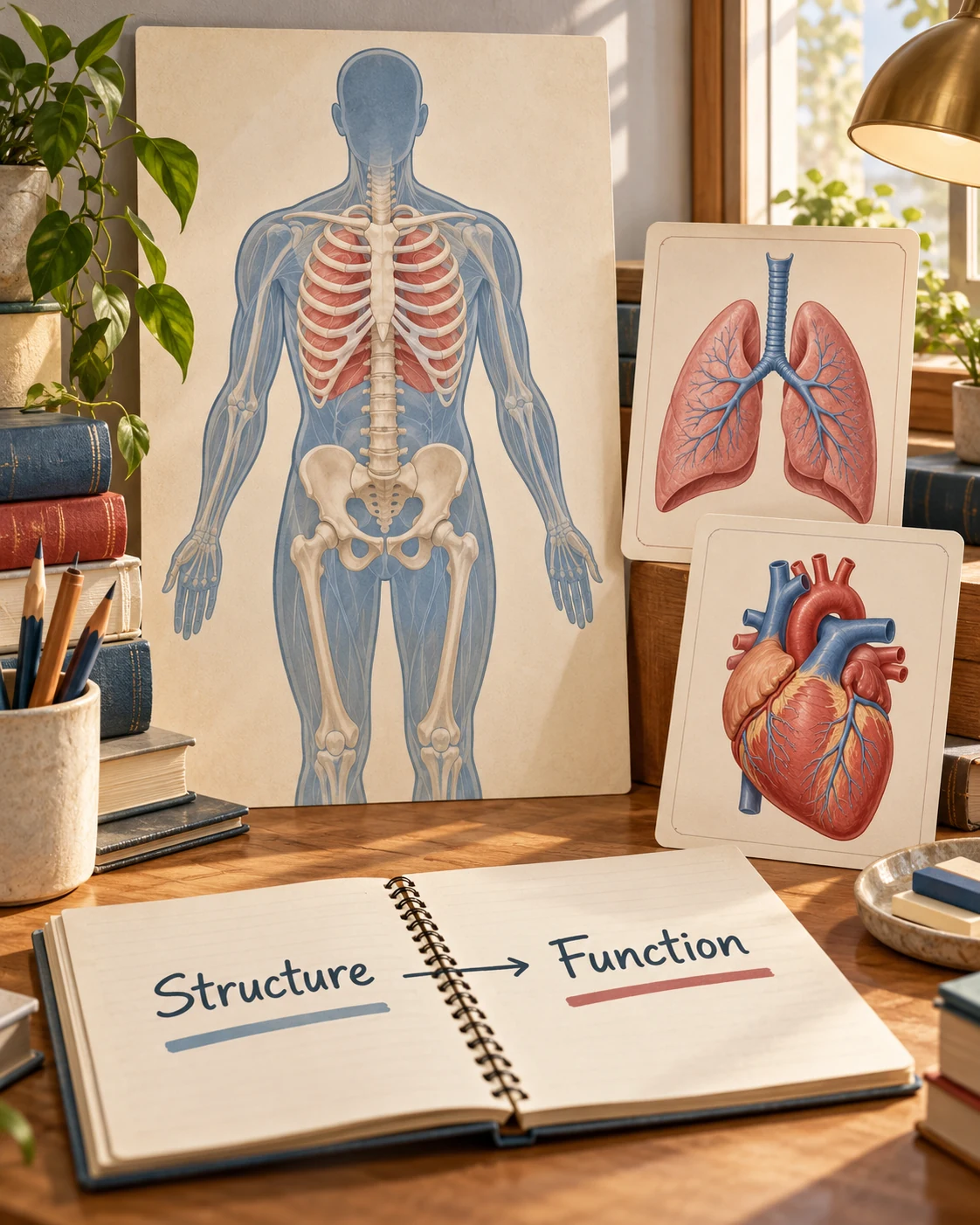
Download the ten-page PDF for five illustrated question-and-answer pairs. Print the pages you need for a broad introduction or a quick recap.
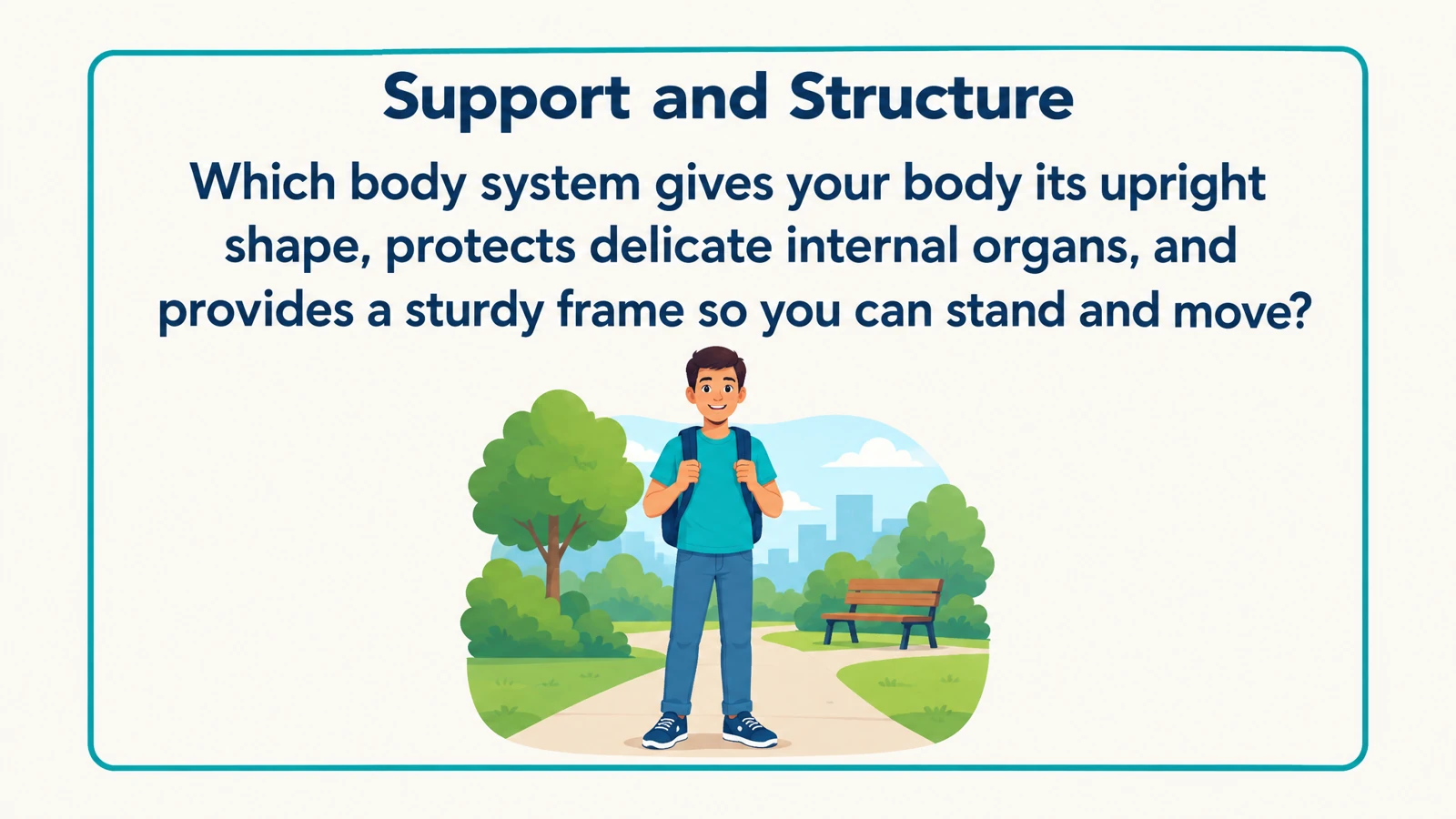
Begin with the function described by the card. The complete sample gives you five system-focused pairs to explore.
Download the Body Systems PDF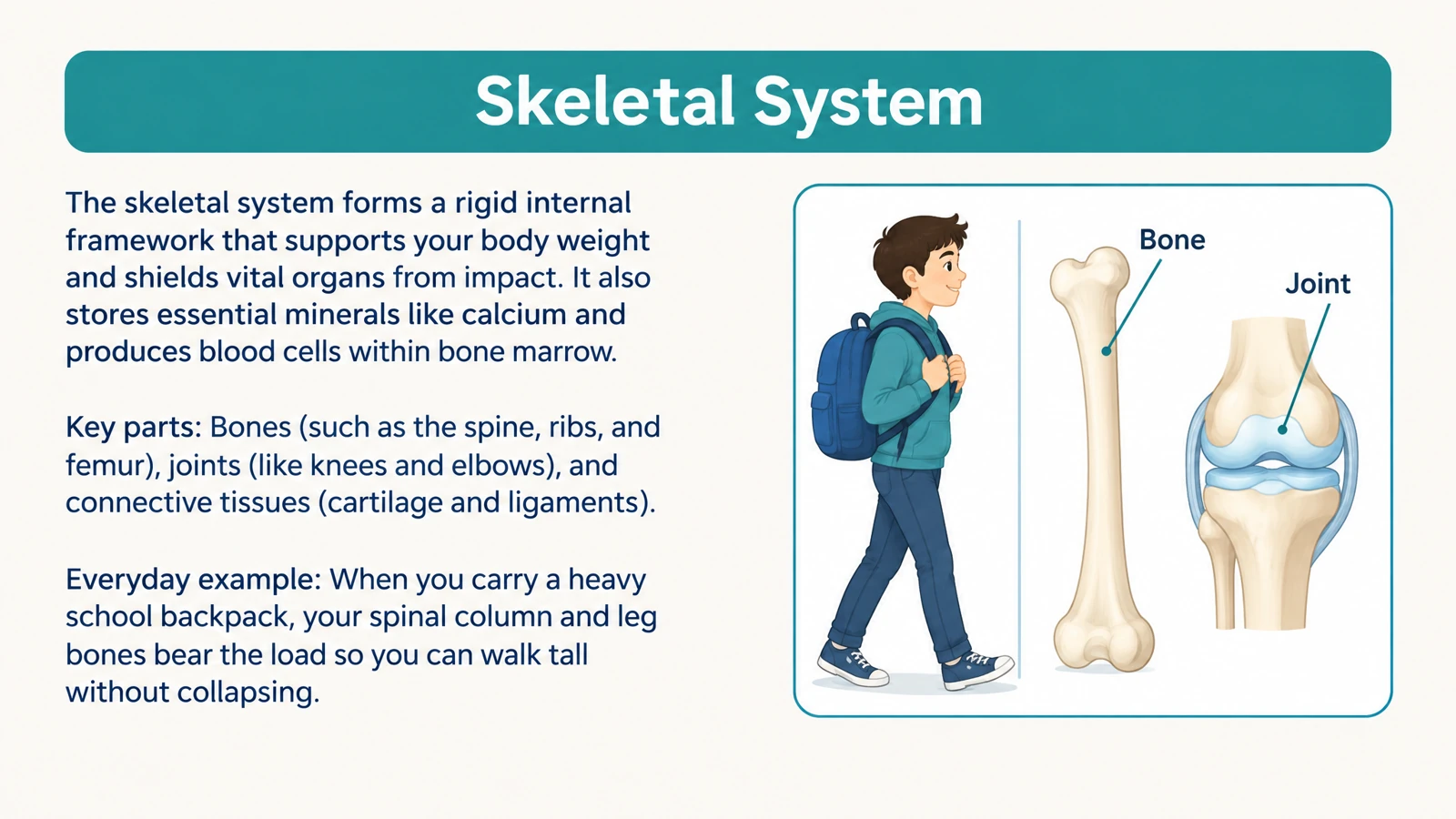
Use the illustrated answer to connect the name with the function. Add an everyday example, such as movement or breathing.
Bring another system into the discussion and explain how its role differs. Keep the sample nearby as a reference during the recap.
The sample introduces skeletal, muscular, circulatory, respiratory, and digestive systems through five question-and-answer pairs.
This sample focuses on recognizing systems from their roles and connecting them to key structures. Create a new set when you want a specific region, organ group, or more detailed terminology.
Start with a question about what a system does, then name the structures involved. Use an everyday action to explain how the systems work together.
Yes. Upload the notes or paste the material, then specify the structures, functions, or relationships you want covered.
Yes. Describe the audience and depth. Ask for an introduction to body systems or a more focused treatment of the material in your course.
Yes. Download the ten-page PDF containing the five pairs and select the pages you want to print.
Yes. Export editable PPTX and use PowerPoint to adapt the text and visual elements for your lesson or study session.
Connect cell structures with their functions in an illustrated set.
Build foundational nursing vocabulary with a focused sample set.
Connect questions, variables, fair tests, and evidence.
Revisit atoms, ions, and bonding through visual explanations.
Break a chapter into concepts, processes, and examples to recall.
Explore eleven complete illustrated sets and download their PDFs.
Make illustrated cards you can take to the study table or classroom.
Create illustrated study cards from your material or a topic.
Create anatomy cards for the material you are learning now.