

Curious
Eager to learn or find out more. A curious learner asks why something happens and looks for an explanation.
Connect everyday words with picture prompts, definitions, and examples you can use in a lesson.
Drag and drop your files here.
Paste a link from YouTube, TikTok, X/Twitter, Instagram, Facebook, or any website.
The sample connects a word to a situation, then explains its meaning. Try using each word in another sentence after you reveal the answer.
Eager to learn or find out more. A curious learner asks why something happens and looks for an explanation.
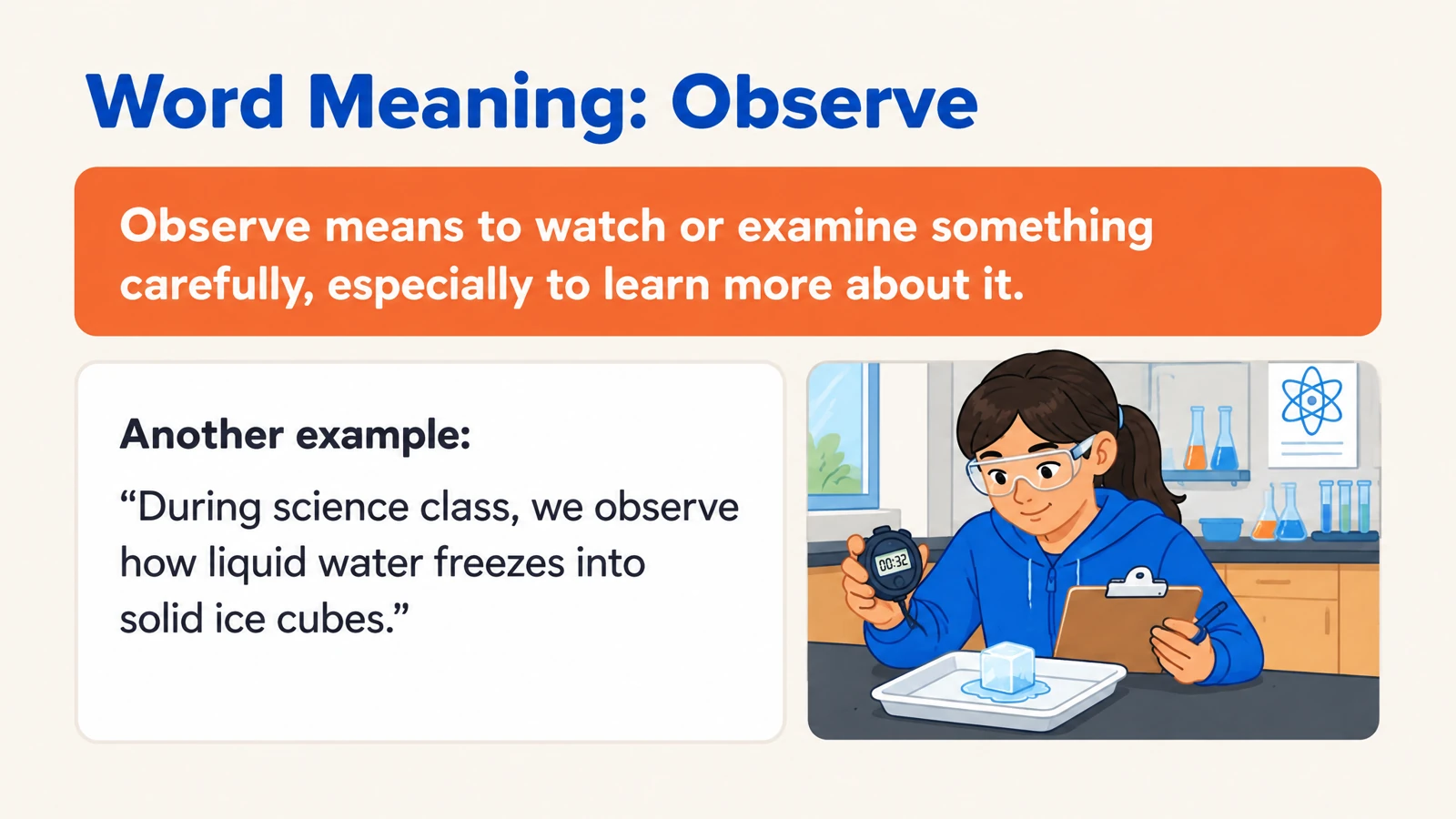
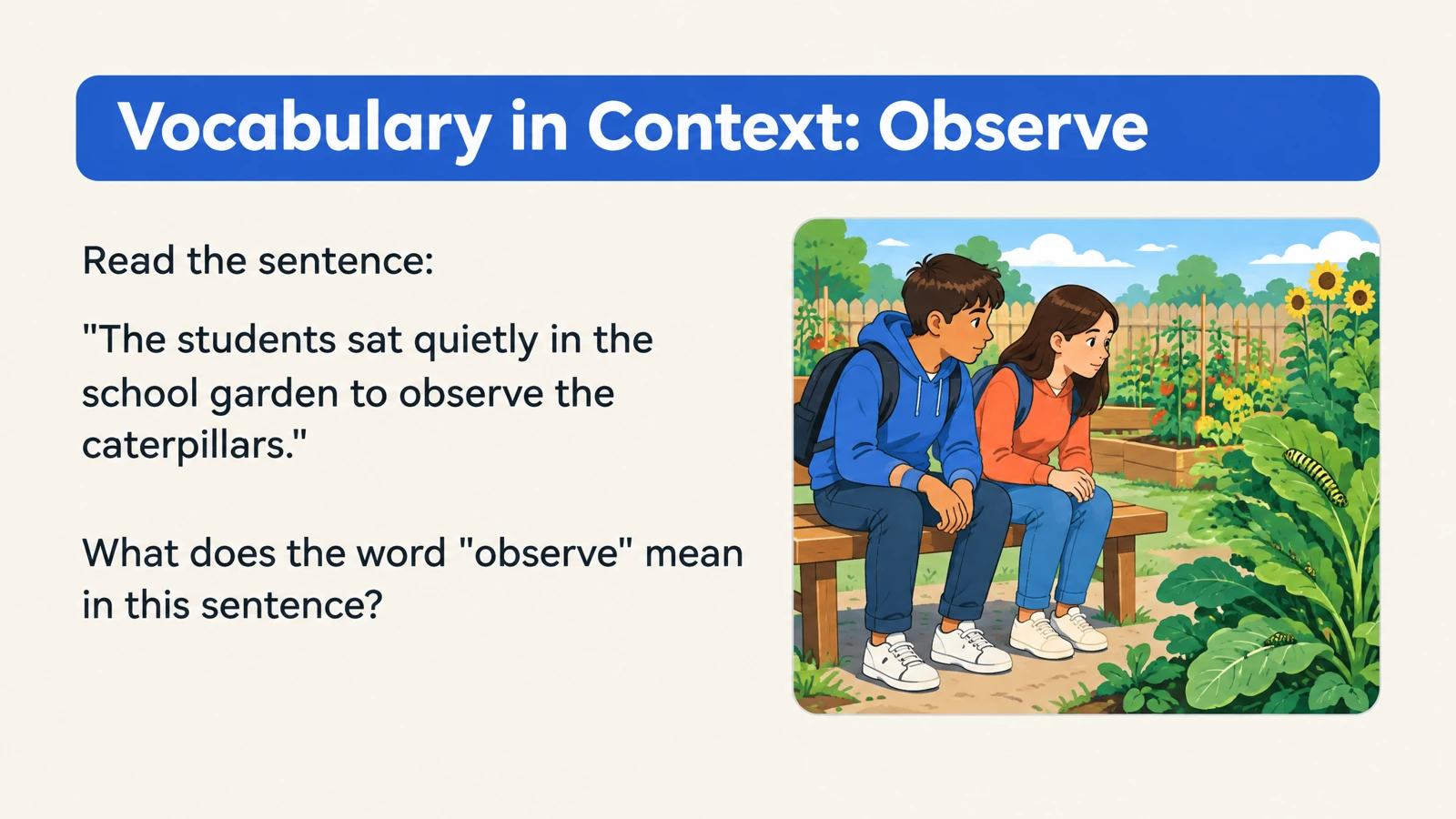
To watch or notice carefully. You might observe a plant each day and record what changes.
Easily broken or damaged. A glass ornament is fragile, so it needs careful handling.
To examine things for similarities and differences. Compare two leaves by their shape, size, and color.
To say what you think will happen using the information you have. You might predict rain after noticing dark clouds.
A curious learner can observe two objects, compare their features, and predict what might happen next. Connecting words gives them a richer context.
Use a short, focused practice session to connect the answers to what you are learning.
Read the scene and explain the target word in your own words before revealing the answer.
Use the same word in a different setting. A new example helps you move beyond remembering a single picture.
Paste vocabulary from a book, course, or conversation. Include the learner level and request examples suited to the way you will use the words.
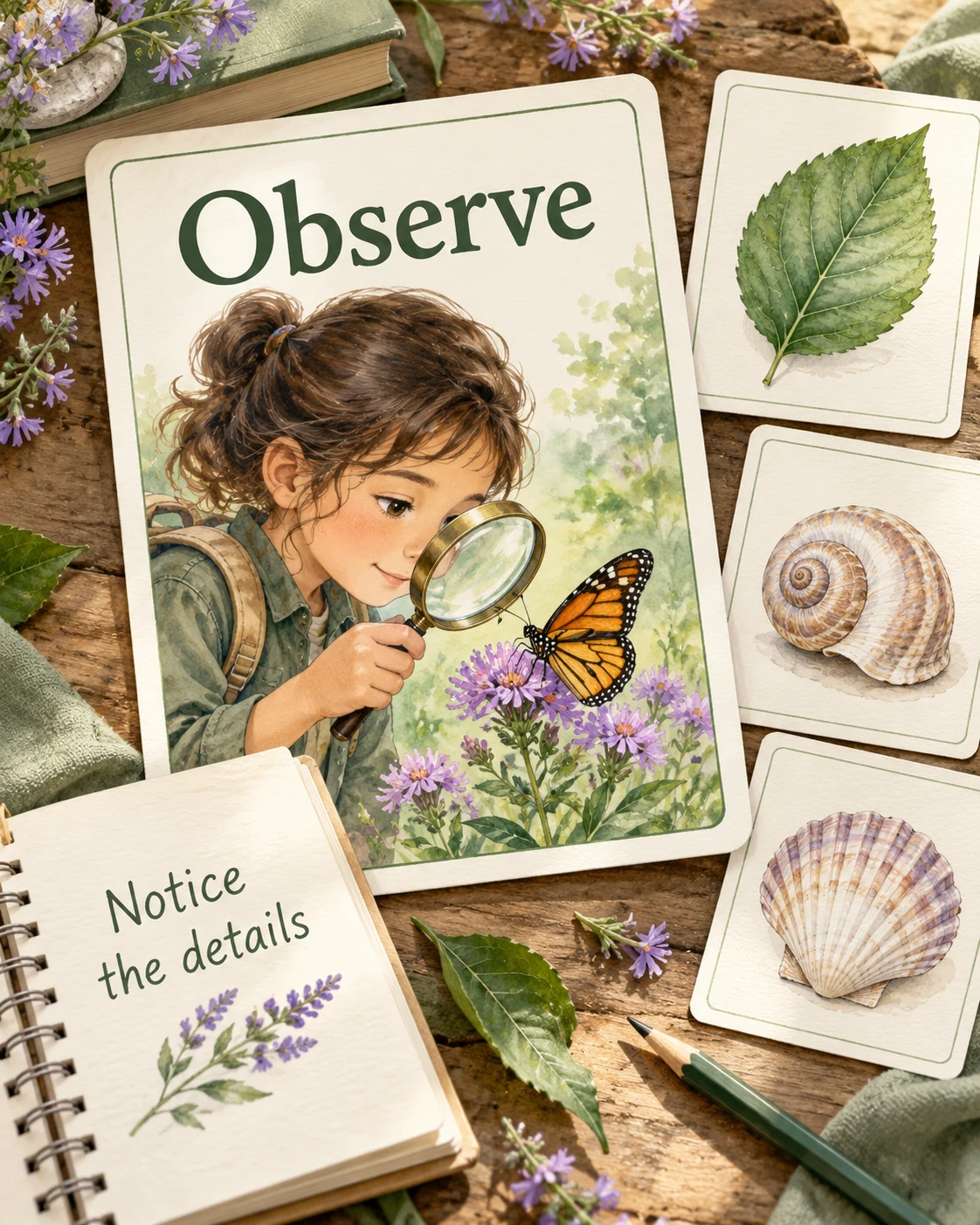
Download five illustrated word-and-explanation pairs as a ten-page PDF. Print question pages, answer pages, or the complete set.
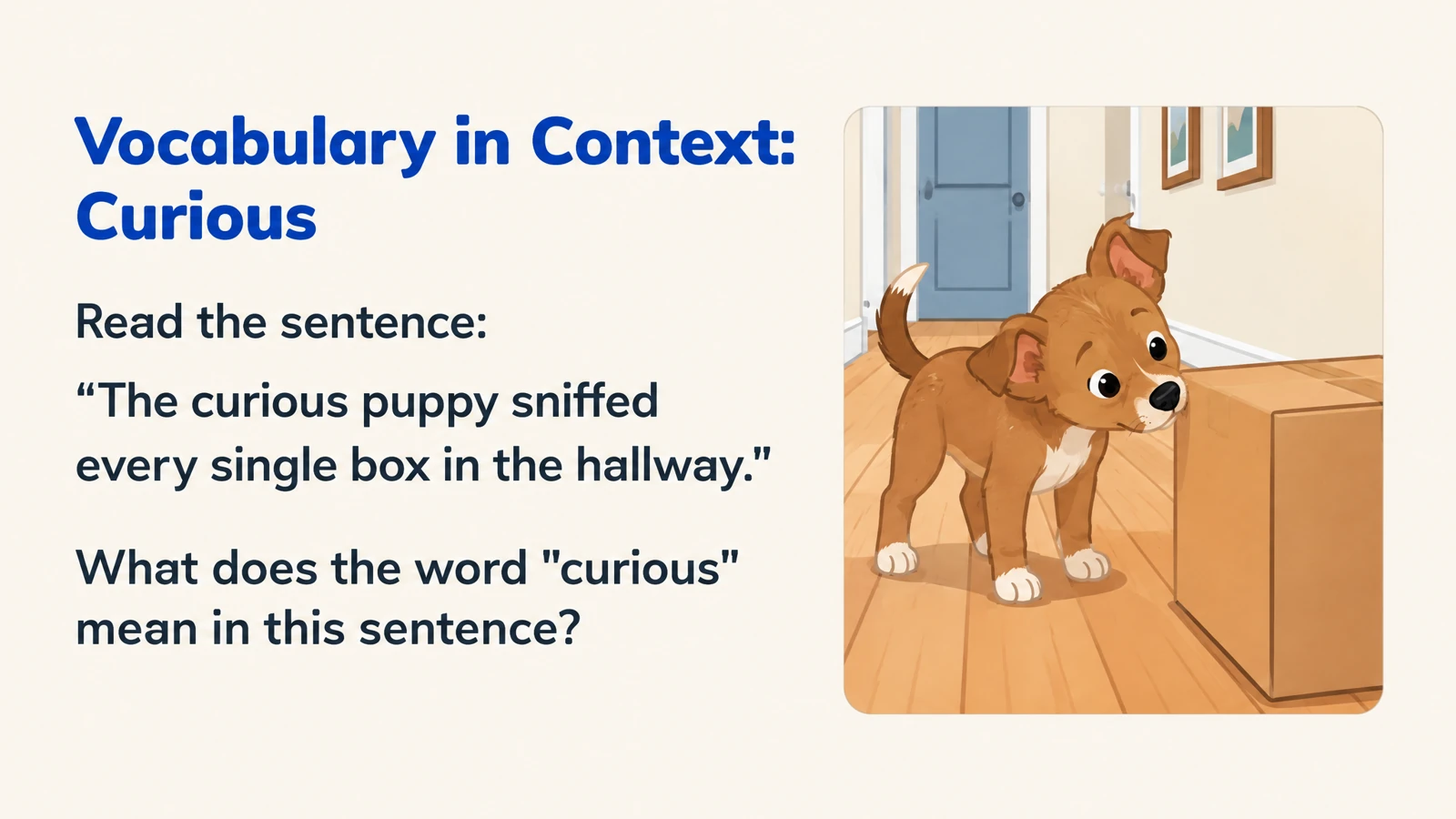
Use the first illustrated prompt to invite a description of the scene. The full PDF keeps all five vocabulary pairs together.
Download the Vocabulary Flashcards PDF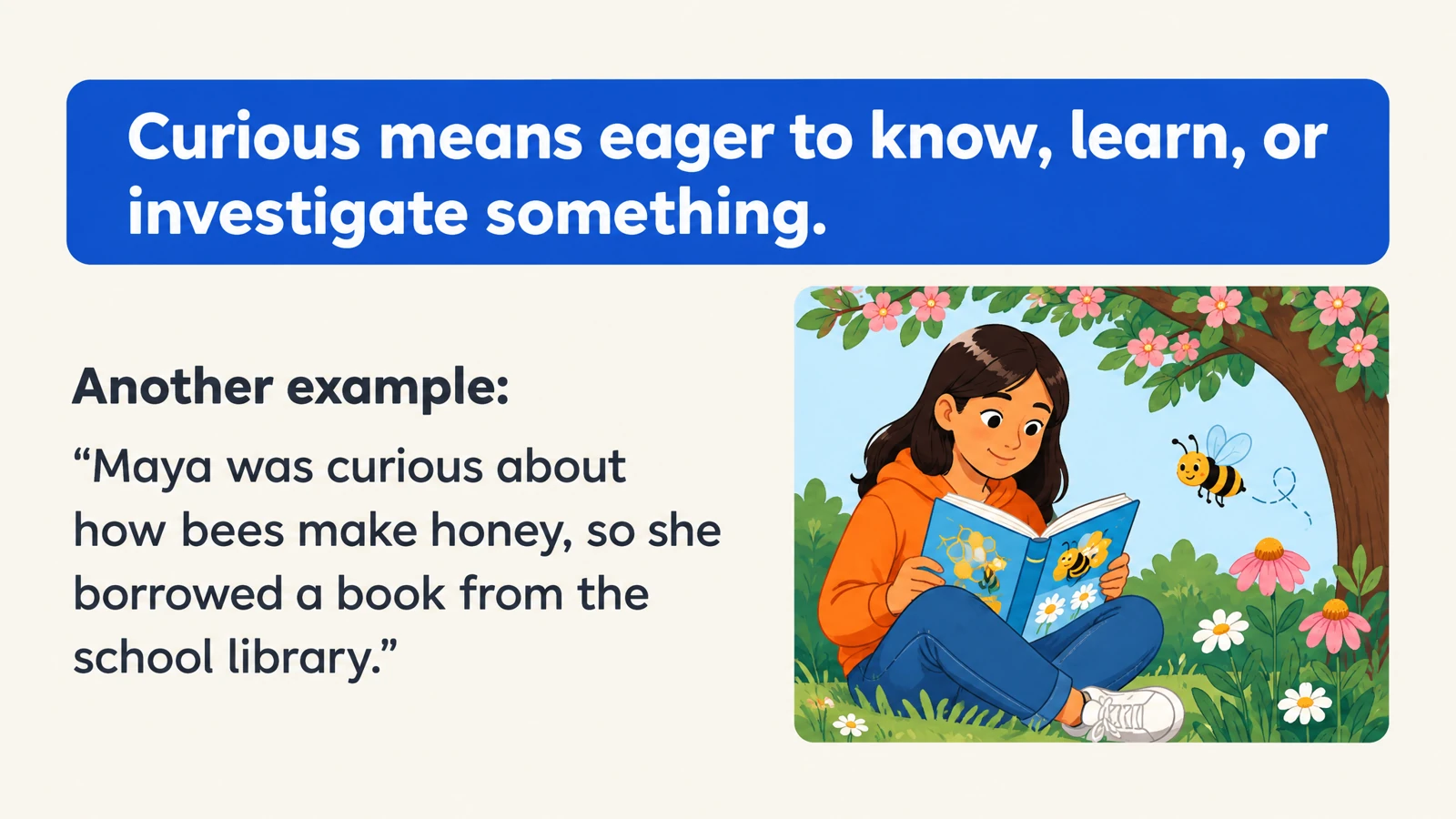
Reveal the explanation after the learner has offered a meaning. Follow it with a fresh sentence from the learner's own experience.
Move to another word and ask how it relates to the scene. Revisit earlier words naturally as the conversation develops.
The sample covers curious, observe, fragile, compare, and predict. Each word has a question page and an answer page with an explanation and example.
A word list names the vocabulary. A contextual card asks you to interpret a situation, then connects the word to a meaning and example you can use.
Yes. Paste the list and describe your audience. Include definitions or example sentences when you want the cards to follow a particular lesson.
Yes. Choose the output language and specify the learner level. Ask for everyday contexts, subject vocabulary, or bilingual prompts in your instructions.
Yes. The PDF download contains the five question-and-answer pairs from the sample. Print the pages you want for individual or partner practice.
Use the vocabulary quiz generator to create questions about meaning and use. Choose the question type and ask for the same target words.
Yes. Export editable PPTX from your generated set and adapt the wording and visual elements in PowerPoint.
Practice everyday Spanish with illustrated bilingual examples.
Practice meanings, relationships, and words in context.
Build illustrated spelling practice around your own word list.
Practice vocabulary and subject terms inside meaningful sentences.
Explain words, processes, and concepts through scenes and diagrams.
Explore eleven complete illustrated sets and download their PDFs.
Make illustrated cards you can take to the study table or classroom.
Give lecture notes and pasted text a question side for revision.
Create cards from the vocabulary that matters to your learners.