


From cottage production to factories
The factory system brought workers and machinery together in centralized workplaces. Explain how this changed where and how production happened.
Connect factories, steam power, and urban growth through illustrated questions about industrial Britain.
Drag and drop your files here.
Paste a link from YouTube, TikTok, X/Twitter, Instagram, Facebook, or any website.
The sample focuses on industrialization in Britain. Use the prompts to connect an invention or term to the wider change it represents.
The factory system brought workers and machinery together in centralized workplaces. Explain how this changed where and how production happened.
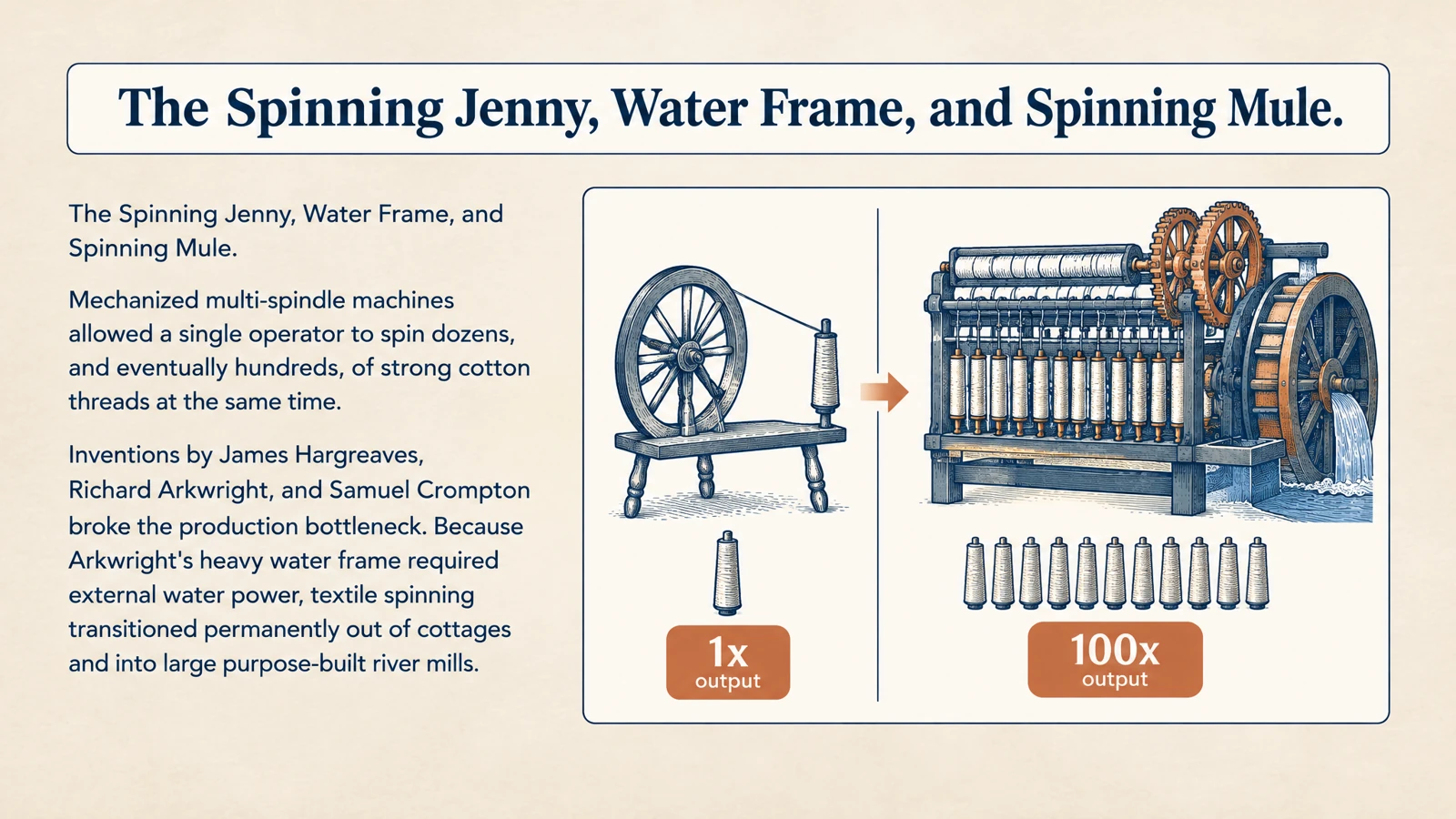
Spinning machinery increased the amount of yarn workers could produce. Connect the inventions to the production process they transformed.
Improvements to steam engines expanded the ways power could be used in industry. Ask how a new source of power affected production and location.
The growth of industrial towns changed where people lived and worked. Link the term to migration, employment, housing, and urban conditions.
Factory production brought more regulated schedules and new working environments. Explain how those routines differed from the work patterns described in the earlier period.
Build an explanation that connects a development to its effects. A useful history answer names more than an invention; it explains what changed and for whom.
Use a short, focused practice session to connect the answers to what you are learning.
Mechanized production, steam power, and growing towns belong to a connected historical story. Use each recalled term to build a link in that explanation.
Name the development: Answer the card’s question with the term or change it asks for. Then give a sentence explaining its significance.
Connect two cards: Explain how mechanization, steam power, and urban growth relate. Use the set to practice a chain of reasoning rather than five isolated facts.
Create a period-specific set: Add notes or describe the period, place, and level. Ask for causes, comparisons, chronology, or consequences to match your study goal.
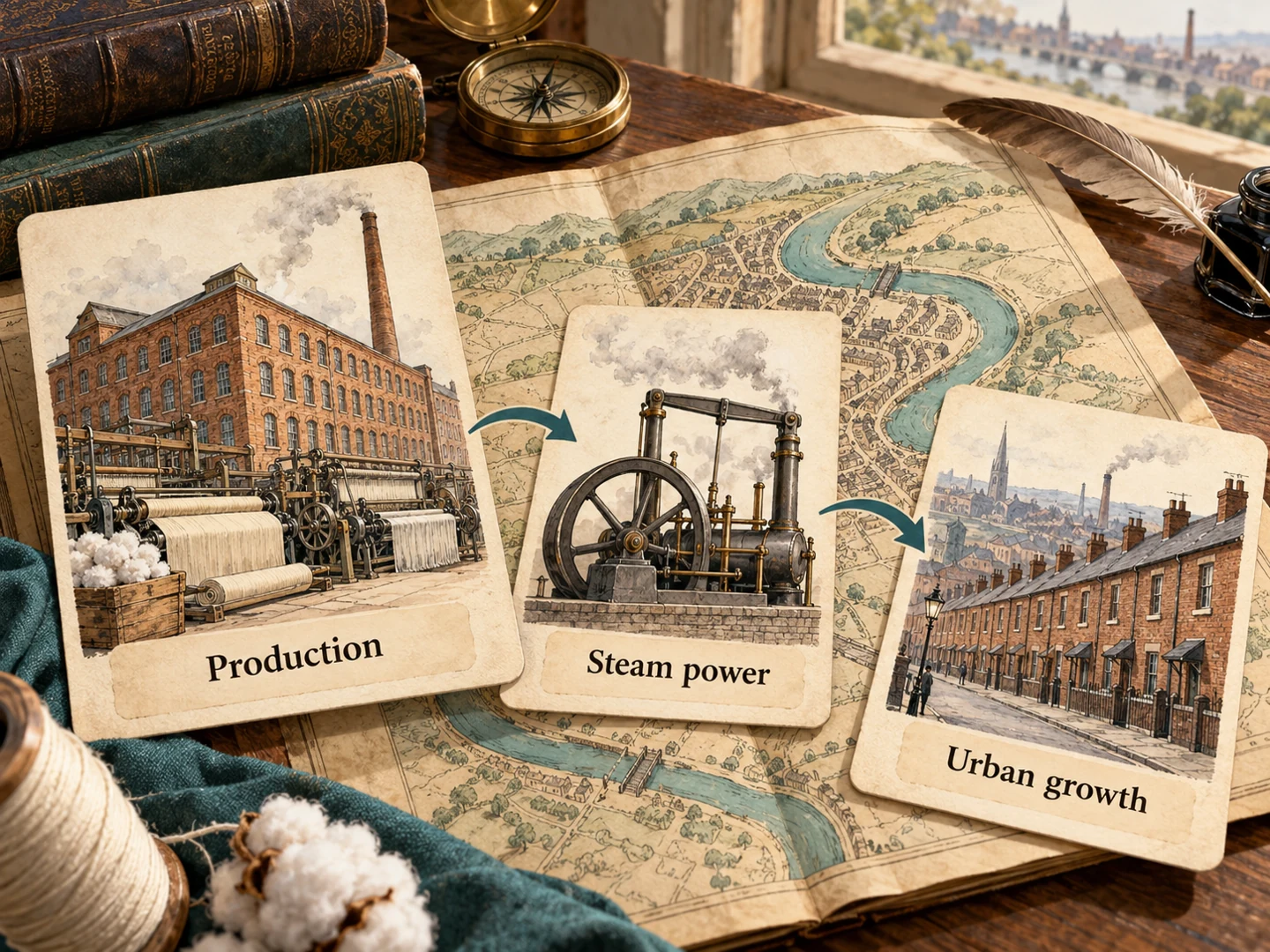
The ten-page PDF pairs five illustrated questions with explanations of industrial change in Britain. Use it for a short recap or a discussion about causes and consequences.
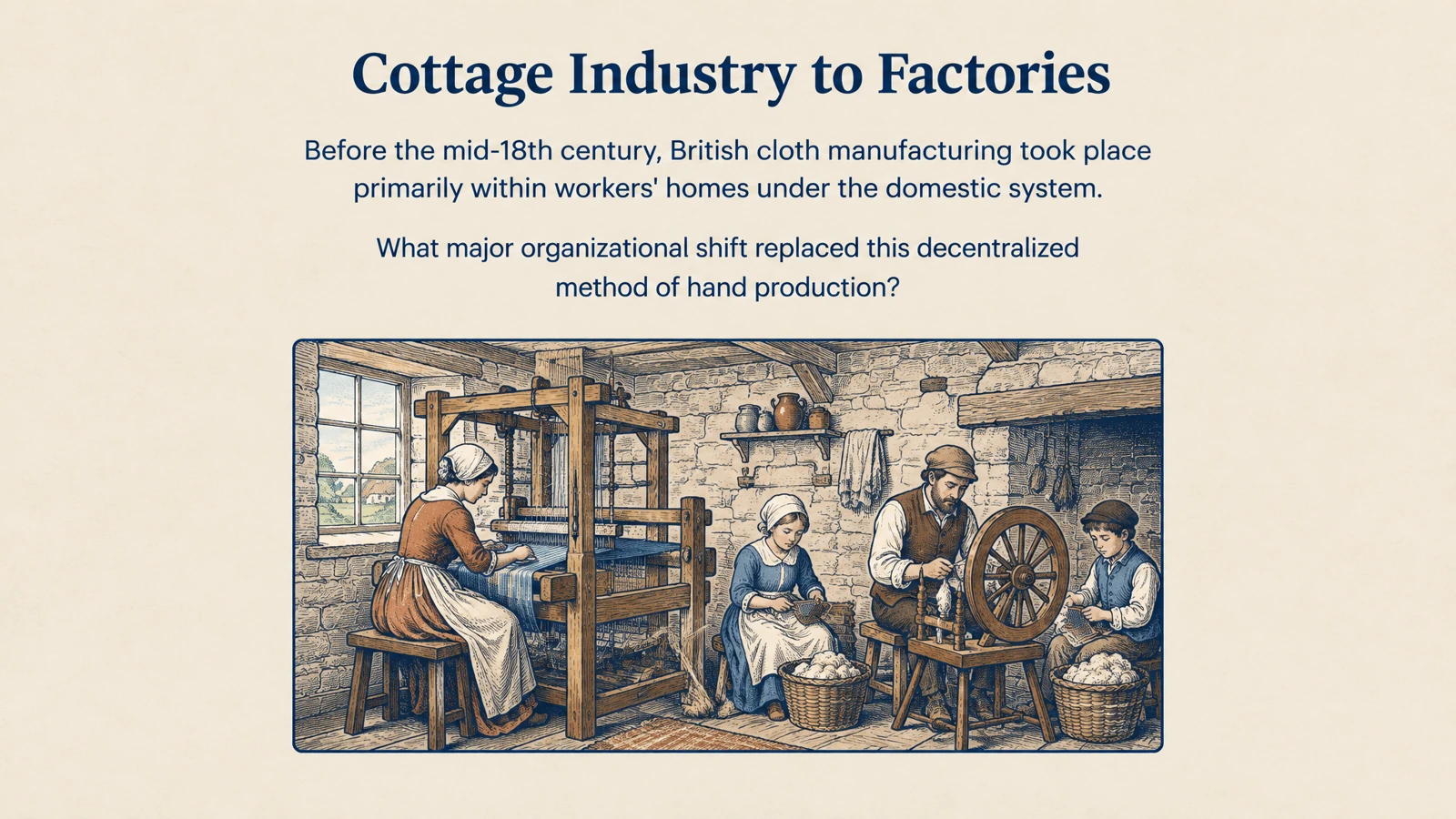
Use the opening question to describe how production changed. Download the complete set to connect factories, steam power, and urban growth.
Download the Industrial Revolution PDF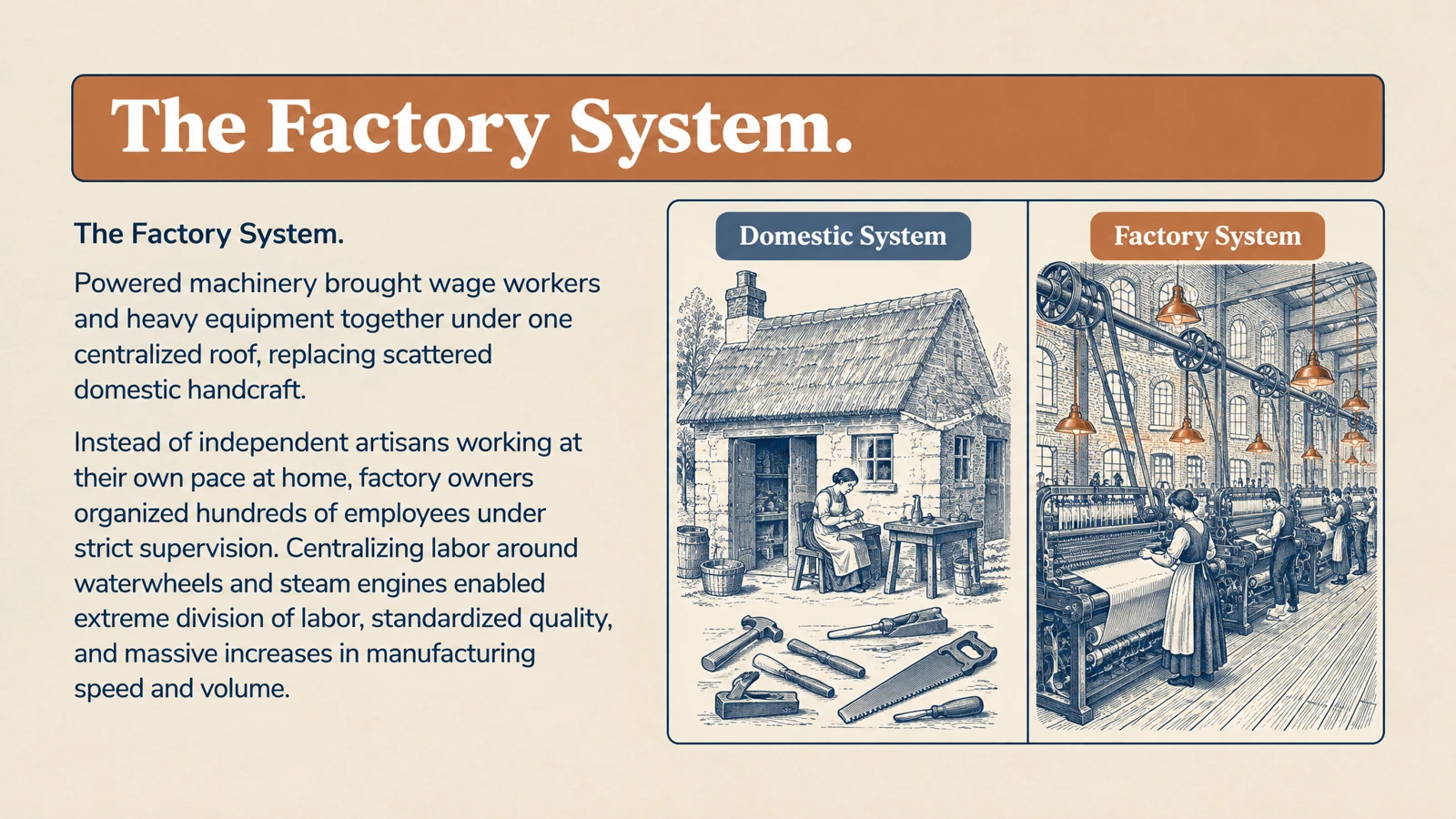
Reveal the explanation after naming the development and its significance. Ask whose work or daily life was affected by the change.
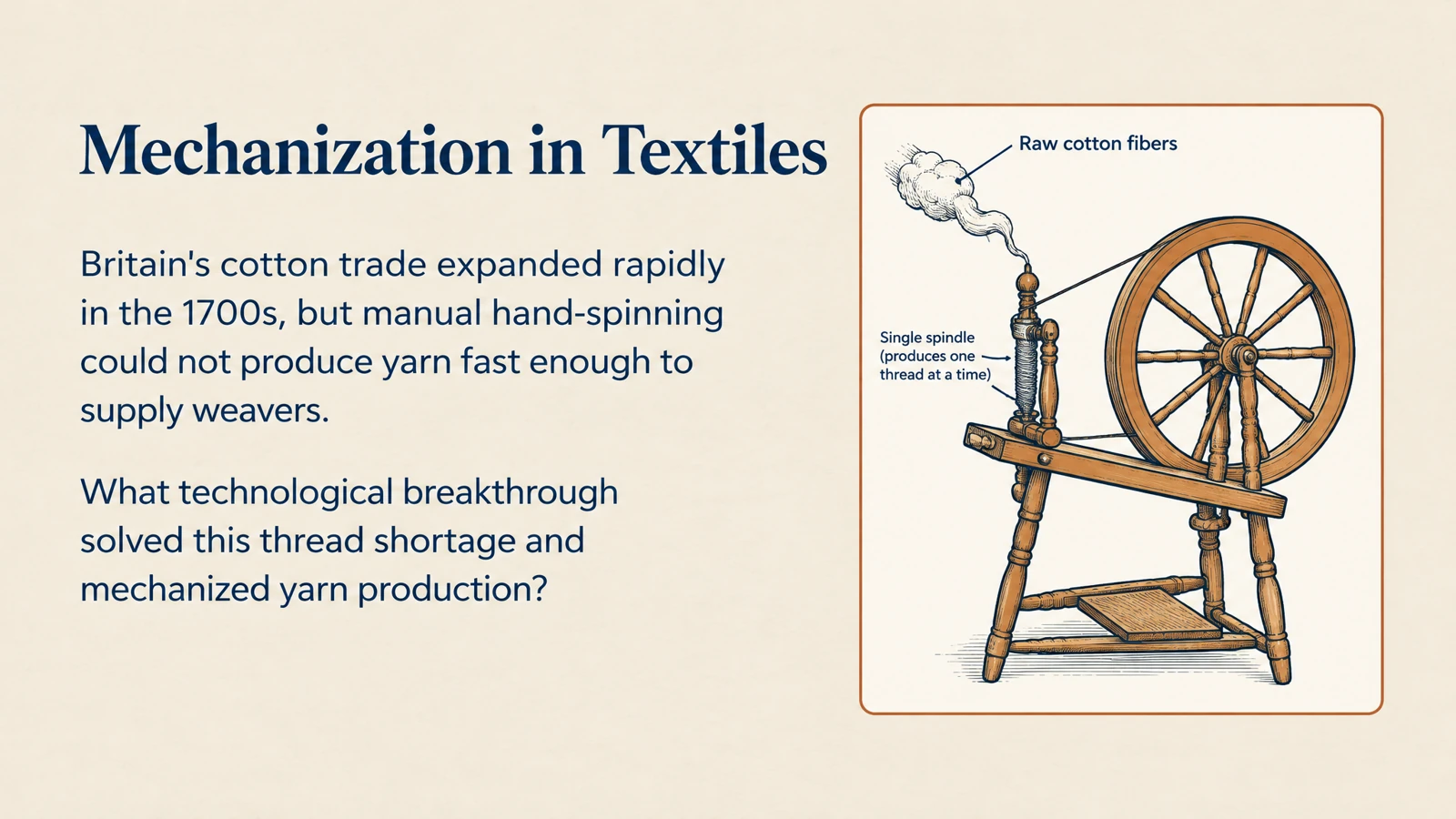
Move to another question and explain its relationship with the previous idea. The printed sequence can help structure a longer historical argument.
The five pairs focus on the Industrial Revolution in Britain, including factories, textile mechanization, steam power, urbanization, and working conditions.
Yes. Use a card to recall a cause, explain a change, or connect a development to a consequence. The sample emphasizes relationships rather than a date list.
Turn an answer into a short explanation of significance, then connect it to another card. Use those links to rehearse a paragraph or discussion point.
Yes. Specify the period, location, and learning objectives, or provide your own notes and reading material. Ask for chronology, people, causes, or comparisons.
Yes. Paste the notes or upload the document and name the focus. This helps the set follow the material and terminology you are studying.
Yes. The PDF contains the complete five-pair example. Print selected pages for independent study, paired questioning, or a group discussion.
Yes. Export a generated set as editable PPTX. Adjust wording and visual elements, add your own evidence or discussion prompts, and present the cards.
Break a chapter into concepts, processes, and examples to recall.
Turn an online article into questions you can revisit after reading.
Prepare to explain a paper's question, methods, and findings.
Explore eleven complete illustrated sets and download their PDFs.
Make illustrated cards you can take to the study table or classroom.
Give lecture notes and pasted text a question side for revision.
Turn a chapter into recall, comparison, and application questions.
Create illustrated study cards from your material or a topic.
Create cards that connect the events to their significance.