


Sort messy strategy notes
Turn workshop notes, market research, or planning bullets into the four SWOT quadrants without rebuilding the slide manually.
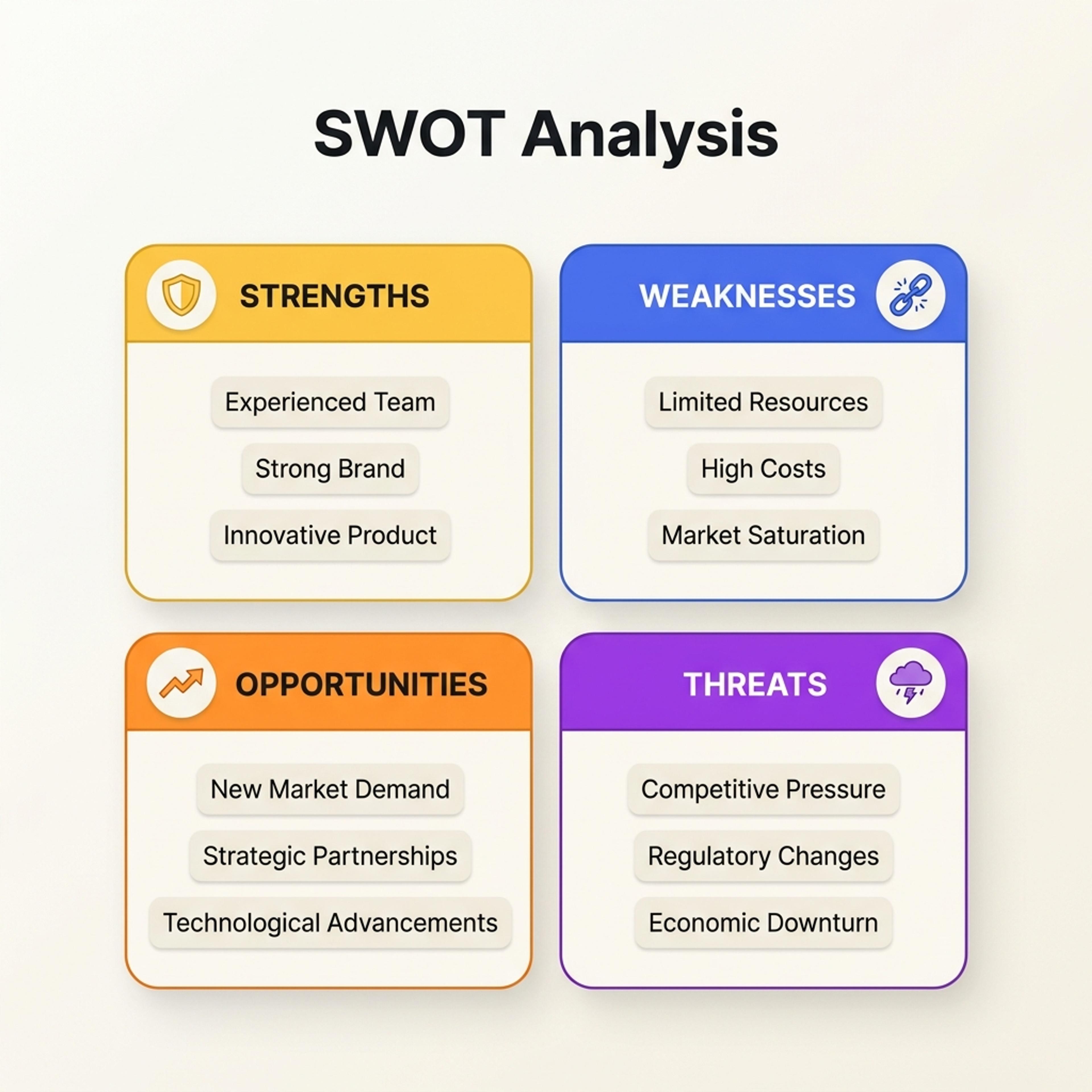
Organize strengths, weaknesses, opportunities, and threats into a clear strategic planning slide.
Drag & drop your file here or
A SWOT analysis separates internal strengths and weaknesses from external opportunities and threats, giving a team a shared view of where to act.
Use a SWOT slide when the team needs to compare internal reality with external pressure.
Turn workshop notes, market research, or planning bullets into the four SWOT quadrants without rebuilding the slide manually.
Make strengths, weaknesses, opportunities, and threats visible at the same time so the conversation does not overfocus on one side.
Use the draft to align teams before decisions about positioning, market entry, product direction, or business planning.
Start with your notes, then refine the four quadrants into a slide your team can debate.
Describe the company, product, market, competitor, or initiative you want to evaluate.
Include evidence, customer feedback, market signals, team concerns, or opportunity areas so the SWOT is grounded in real material.
Review whether each point belongs in the right quadrant, remove duplicates, and rewrite labels so they are specific enough to act on.
Use SWOT slides to balance internal strengths and weaknesses with external opportunities and threats.
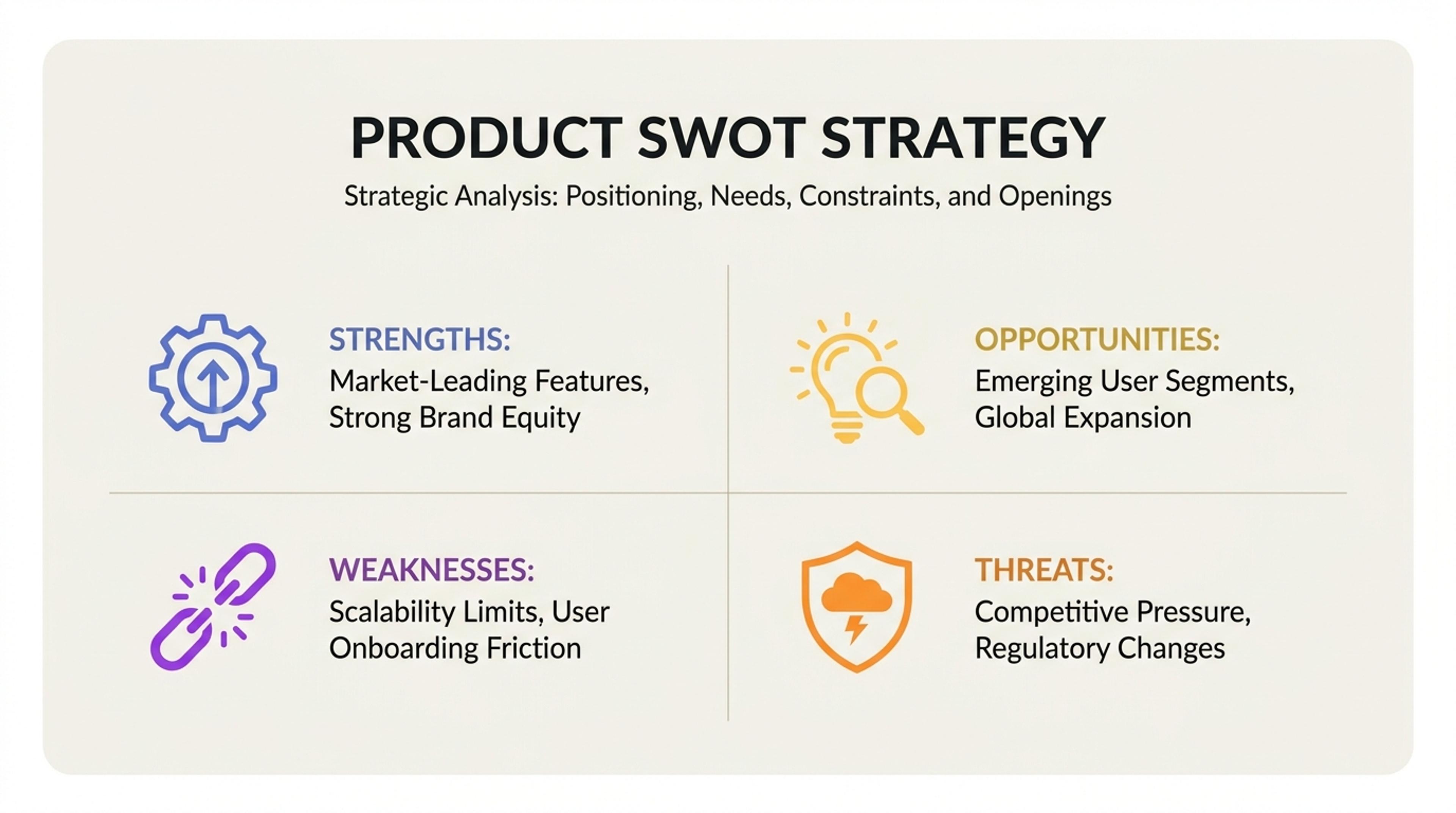
A four-quadrant strategy slide for product positioning, customer needs, constraints, and market openings.
Include the business, product, market, or decision you are analyzing, plus any research notes or workshop findings you want reflected in the four quadrants.
It can draft the categorization, but you should review it. SWOT depends on context, so the final judgment should come from your team and evidence.
Yes. You can use it to compare your position against a competitor, especially when you already have notes about capabilities, gaps, market trends, and risks.
Yes. Rewrite quadrant labels, remove weak points, and adjust the framing before using the slide in a strategy meeting or client presentation.
For a presentation, keep each quadrant tight. Three to five strong points per quadrant usually works better than trying to include every note.
Use these formats when your SWOT needs market context, prioritization, or a clearer planning narrative.
Turn topics, notes, documents, and links into editable visuals for slide decks, lessons, reports, and planning conversations.
Structure political, economic, social, technological, legal, and environmental factors into a strategic planning slide.
Visualize conversion stages, selection processes, sales pipelines, recruiting steps, and drop-off points in a funnel chart.
Show hierarchy, foundations, priority levels, maturity stages, and strategic layers in a pyramid chart.
Organize scattered notes, research themes, brainstorms, and lesson topics into a clear editable mind map.
Paste strategy notes, market research, or workshop findings and turn them into an editable SWOT analysis.