
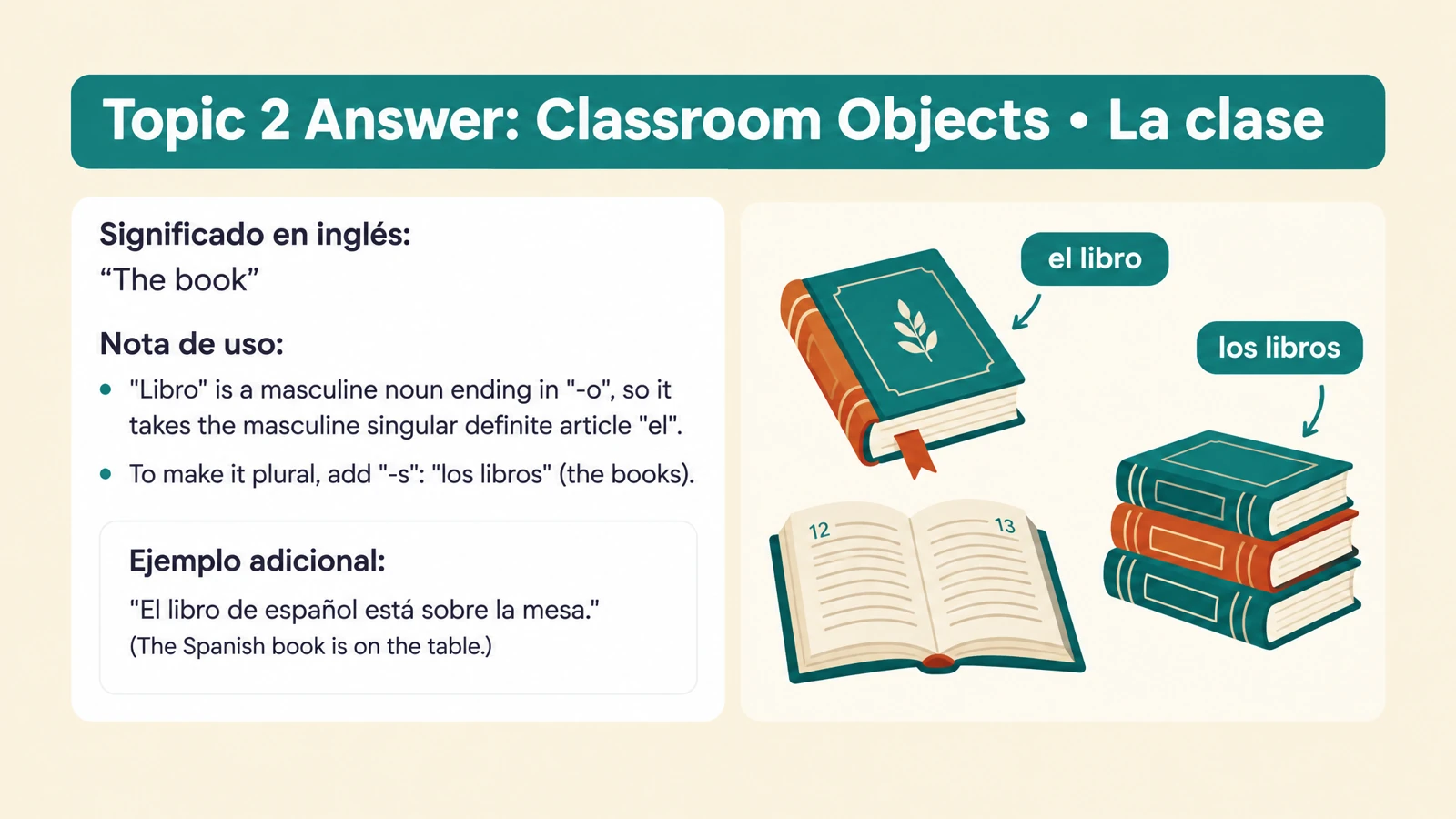


Buenos días — good morning
Use buenos días as a morning greeting. In the sample, the greeting becomes part of a familiar encounter with a teacher.
Introduce everyday Spanish through familiar scenes, English meanings, and short usage examples.
Drag and drop your files here.
Paste a link from YouTube, TikTok, X/Twitter, Instagram, Facebook, or any website.
Learn the noun with its article, notice the example, and then use the word in another short sentence.
Use buenos días as a morning greeting. In the sample, the greeting becomes part of a familiar encounter with a teacher.
Libro is a masculine noun, so the singular definite article is el. Its plural is los libros.
Manzana is a feminine noun. La manzana refers to one apple; las manzanas refers to apples.
Hermana names a sister. Practice it within a family sentence, such as “Mi hermana se llama Sofía.”
Beber is an infinitive ending in -er. Connect the word to a familiar action, then practice it in a short sentence.
Learn useful chunks as well as single words. “Buenos días” and “el libro” carry information you would lose by studying just días or libro alone.
Use a short, focused practice session to connect the answers to what you are learning.
Look at the picture and recall the Spanish word or expression. Say it before turning the card.
Change one detail in the sentence: the person, object, or action. This gives the word a new context while keeping the task manageable.
Ask for travel, food, school, or family vocabulary. Specify beginner level and whether you want Spanish prompts with English explanations.
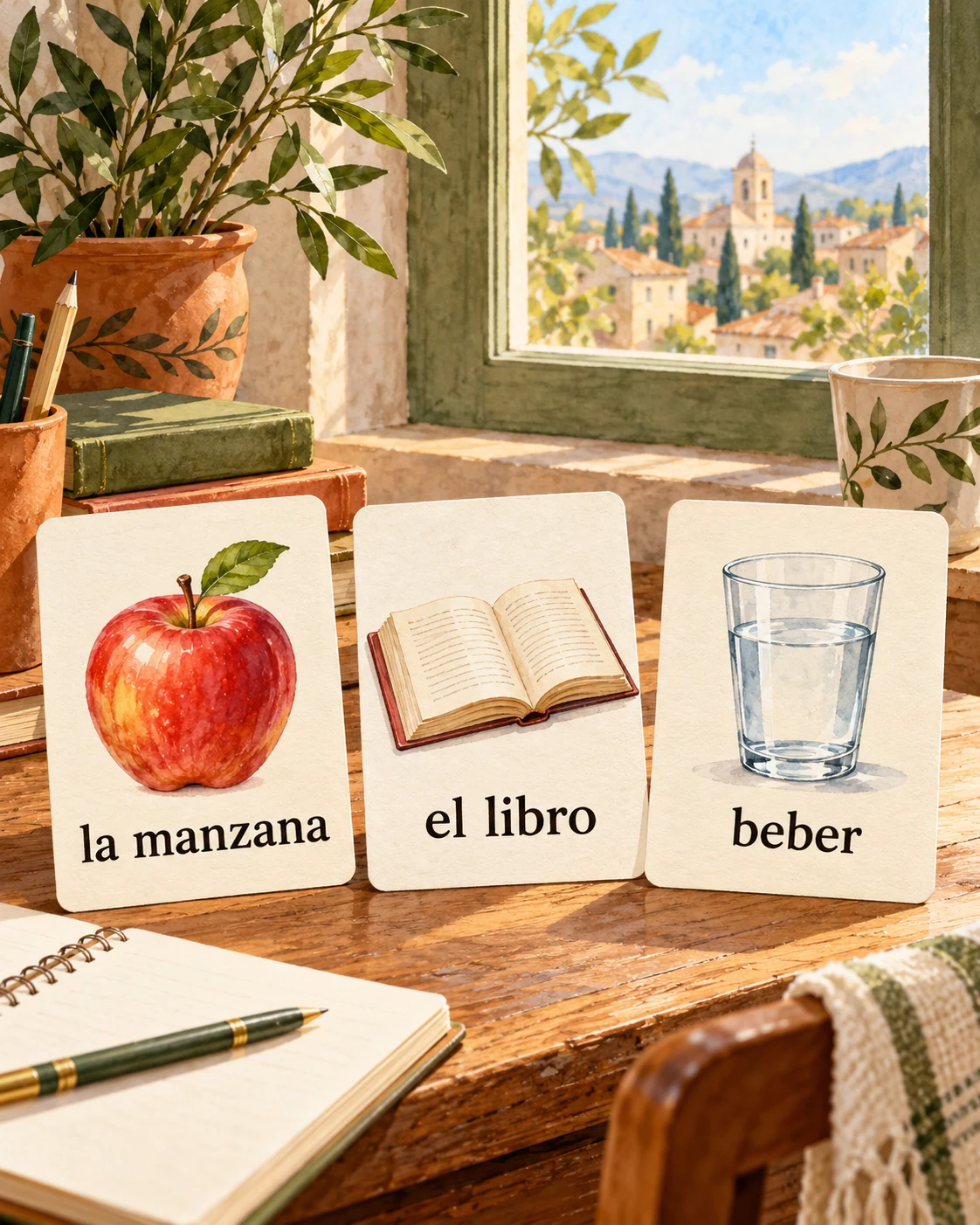
The bilingual sample contains five question-and-answer pairs across ten PDF pages. Choose a comfortable print size for individual or paired practice.
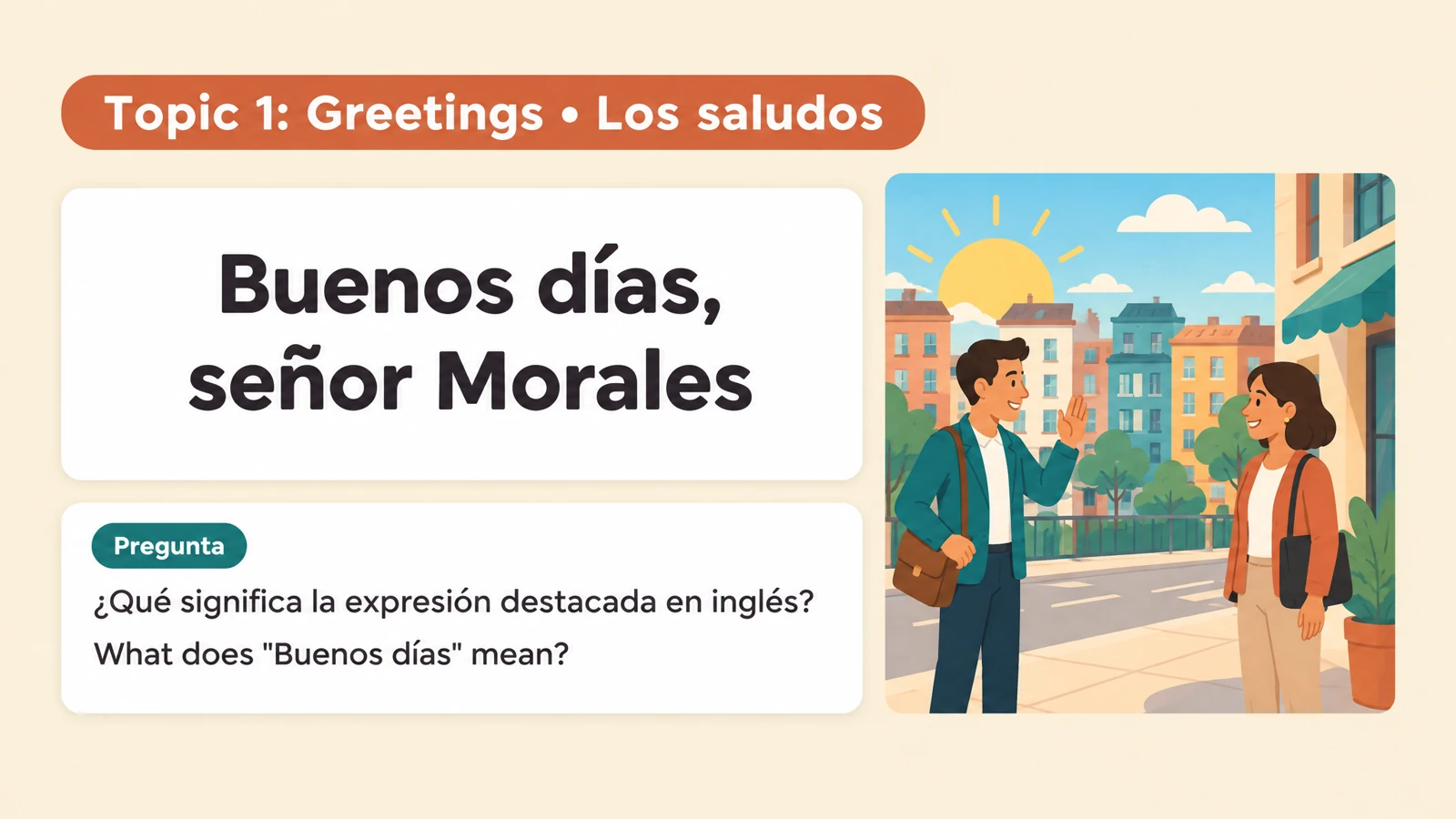
Use the opening card to connect the expression with its situation. Download the complete sample for the full sequence of everyday examples.
Download the Beginner Spanish PDF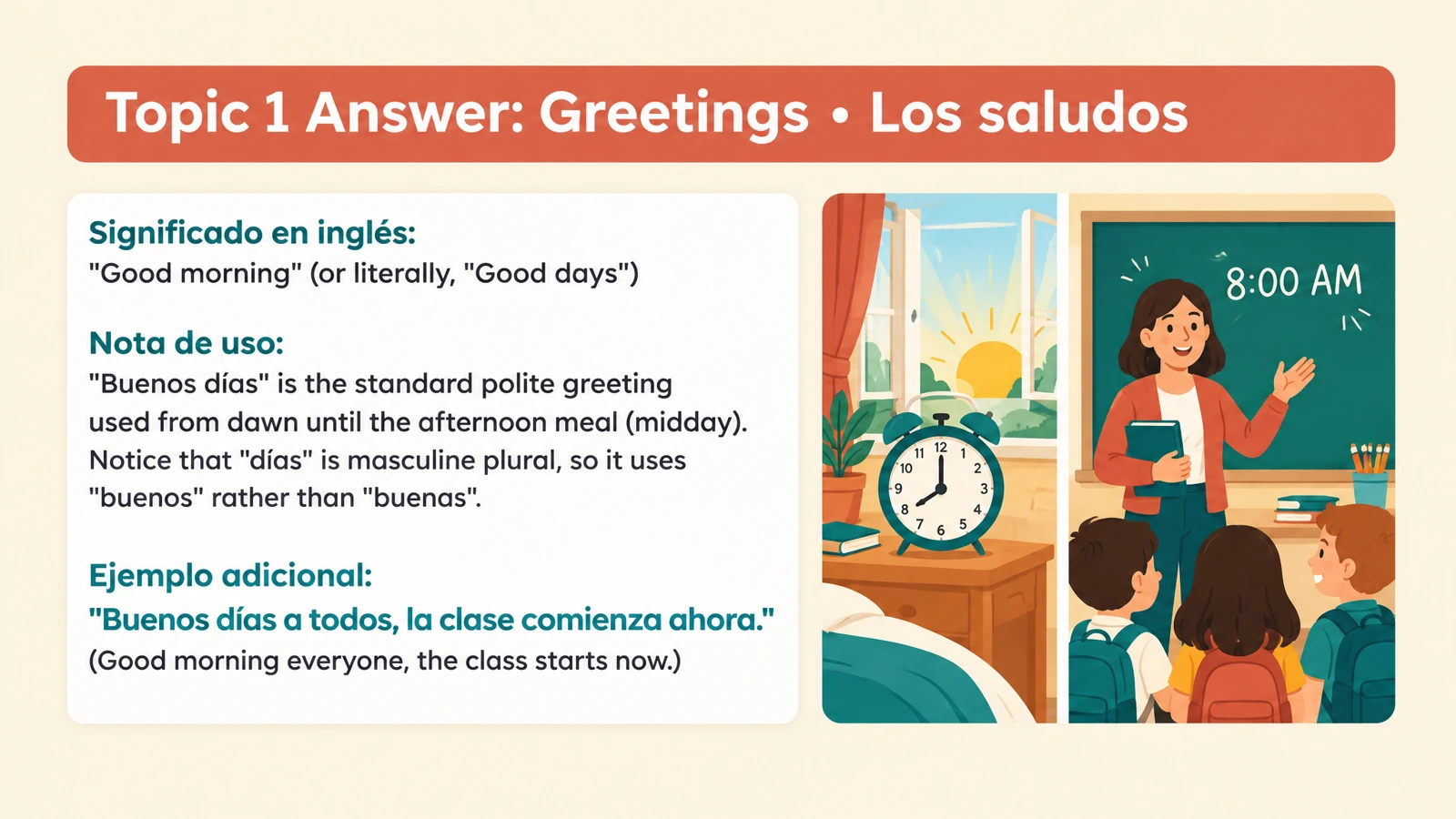
Check the meaning after trying the Spanish phrase. Keep articles with nouns when you describe another object or make a new sentence.
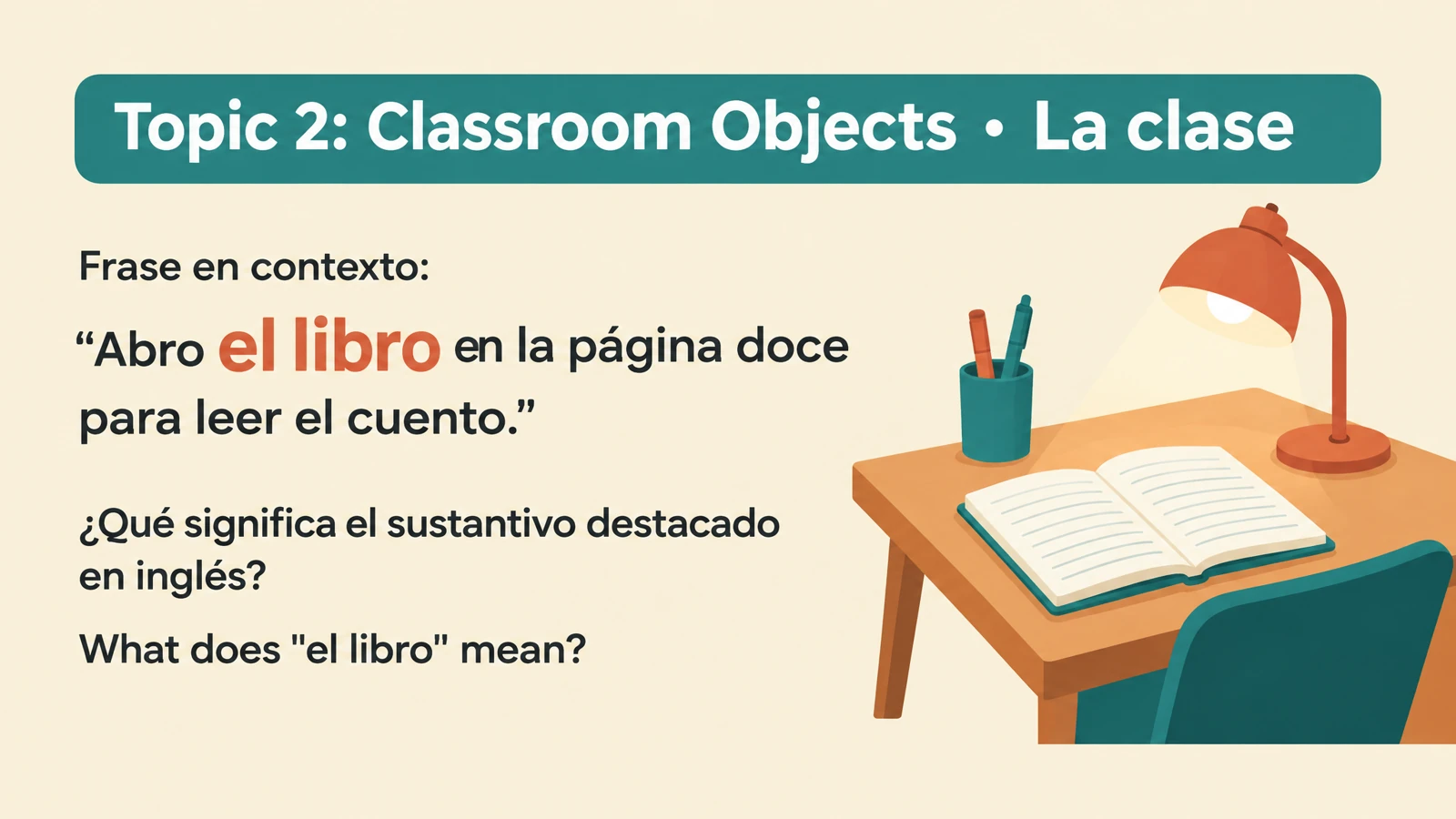
Ask a partner to name what the picture suggests before revealing the answer. The next card gives the conversation a new starting point.
The sample has five question-and-answer pairs covering a greeting, a classroom object, food, family, and an everyday action. The answers include English meanings and usage examples.
Yes. The sample uses everyday vocabulary and short contextual examples. You can create a new set with the level and topic you need.
The article helps you learn the noun’s grammatical gender as part of the phrase. Practicing el libro and la manzana keeps that information attached to the word.
Yes. Describe which language you want for the question and explanation. You can request Spanish words with English meanings or another bilingual arrangement.
Yes. Specify the situations, such as ordering food, finding a place, or greeting someone. Ask for short expressions that fit those situations.
Yes. Use the sample PDF link for all five pairs. Print selected pages or keep the PDF for offline review.
Yes. Export your generated set as editable PPTX to adapt the wording and visual elements in PowerPoint.
Connect useful words with meanings, scenes, and your own examples.
Practice meanings, relationships, and words in context.
Practice vocabulary and subject terms inside meaningful sentences.
Build illustrated spelling practice around your own word list.
Explain words, processes, and concepts through scenes and diagrams.
Explore eleven complete illustrated sets and download their PDFs.
Make illustrated cards you can take to the study table or classroom.
Create illustrated study cards from your material or a topic.
Choose a theme and create your next vocabulary practice.